What Is Lead Generation? A Complete Beginner's Guide
Alice

What Is Lead Generation? A Complete Beginner's Guide
Introduction
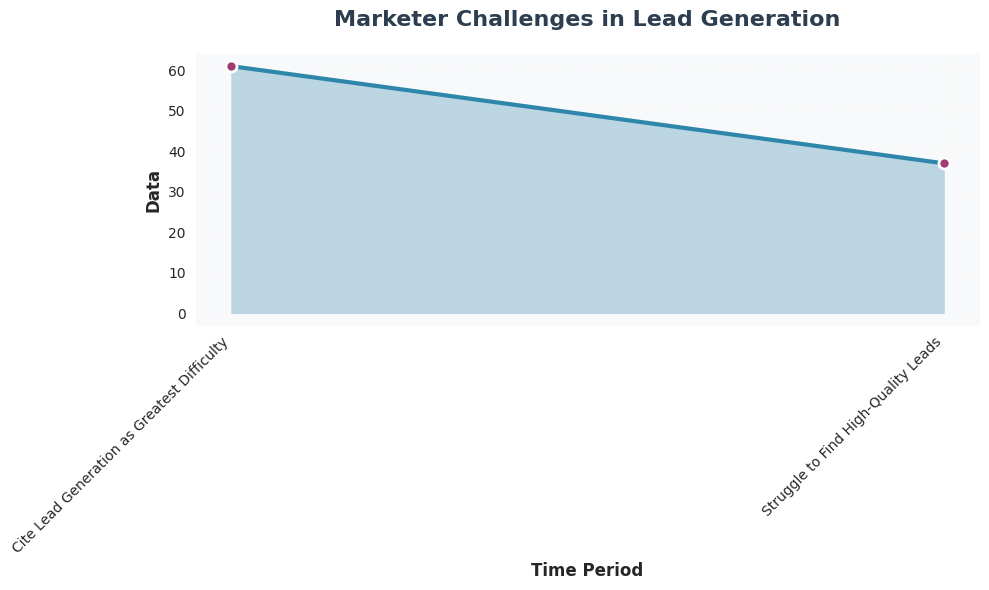
Here's a sobering reality: 61% of marketers cite lead generation as their greatest difficulty, with 37% struggling specifically to find high-quality leads. If you've ever wondered why your business isn't growing as fast as you'd like, the answer often lies in one critical area—lead generation.
But what is lead generation, exactly? At its core, lead generation is the process of attracting and converting strangers and prospects into individuals who have expressed interest in your company's products or services. It's the lifeblood of any business growth strategy, bridging the gap between marketing efforts and actual revenue generation.
In this comprehensive beginner's guide, you'll discover everything you need to know about lead generation: from understanding its fundamental purpose and how it works, to exploring proven strategies that top-performing companies use to generate qualified leads. Whether you're a small business owner, marketing professional, or sales leader, this guide will equip you with the knowledge to build a sustainable pipeline of potential customers.
Let's dive into the world of lead gen and unlock the secrets to consistent business growth.
Understanding Lead Generation: The Foundation of Business Growth
What Is the Purpose of Lead Generation?
Lead generation serves as the engine that drives customer acquisition and revenue generation for businesses of all sizes. The purpose extends far beyond simply collecting names and email addresses—it's about identifying individuals or companies who have a genuine interest in what you offer and guiding them through the sales funnel toward becoming paying customers.
In today's competitive landscape, 89% of B2B marketers prioritize lead generation as their top goal, and for good reason. Without a steady stream of leads entering your marketing funnel, even the most skilled sales teams will struggle to hit their targets. Lead generation creates predictable growth by filling your pipeline with prospects who can be nurtured, qualified, and eventually converted into loyal customers.
The process also serves a strategic purpose: it allows businesses to identify their target audience more precisely, understand buyer personas better, and refine their messaging based on real engagement data. This intelligence becomes invaluable for improving conversion rates and maximizing return on investment across all marketing channels.
The Lead Generation Landscape in 2024-2025
The lead generation market is experiencing unprecedented growth and transformation. The B2B lead generation market is projected to expand at a 9.3% compound annual growth rate (CAGR), reaching USD 13.8 billion by 2033, according to Research Nester 2024. This explosive growth reflects the increasing importance businesses place on systematic approaches to customer acquisition.
However, success in this landscape requires more than traditional tactics. Modern lead generation faces several challenges:
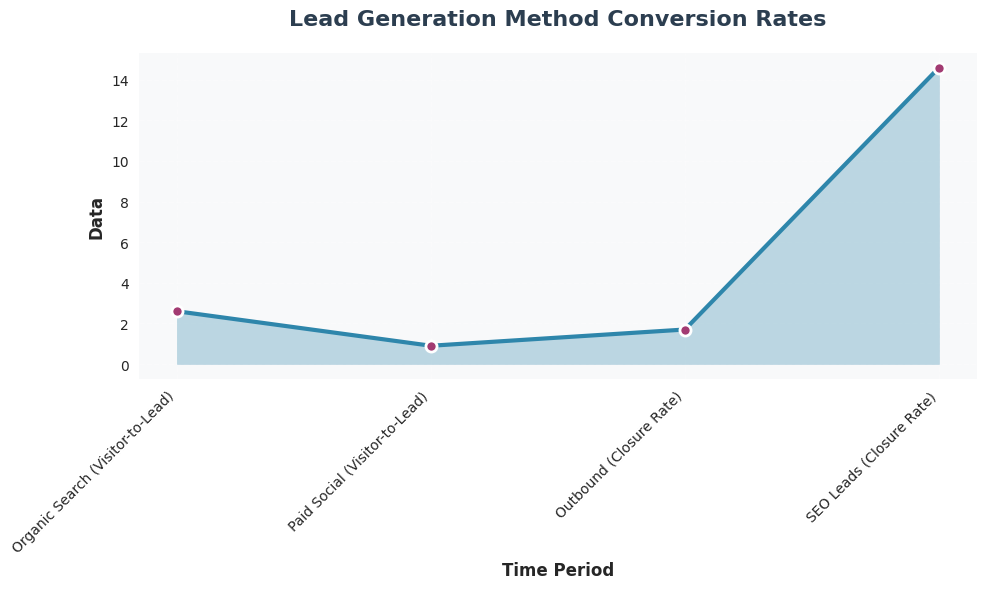
Quality vs. Quantity: While generating high volumes of leads might seem attractive, the focus has shifted dramatically toward quality. 53% of marketers allocate at least half their budget to lead generation activities, yet the average website visitor-to-lead conversion rate for B2B remains modest at just 2-5%. This means that for every 100 visitors to your website, only 2-5 become actual leads.
Multi-Channel Complexity: Today's prospects interact with brands across numerous touchpoints before making decisions. Social media contributes 31% of B2B lead volume, while organic search drives over 1,000% more traffic than organic social for B2B sites. Navigating this multi-channel environment requires sophisticated strategies and integrated tools.
The Speed Imperative: In the modern buyer's journey, timing is everything. Research shows that following up with leads within 5 minutes makes teams 9 times more likely to convert them. This statistic underscores the critical importance of rapid response systems and automated workflows in contemporary lead generation.
How Lead Generation Works: The Complete Process
The Lead Generation Process Explained
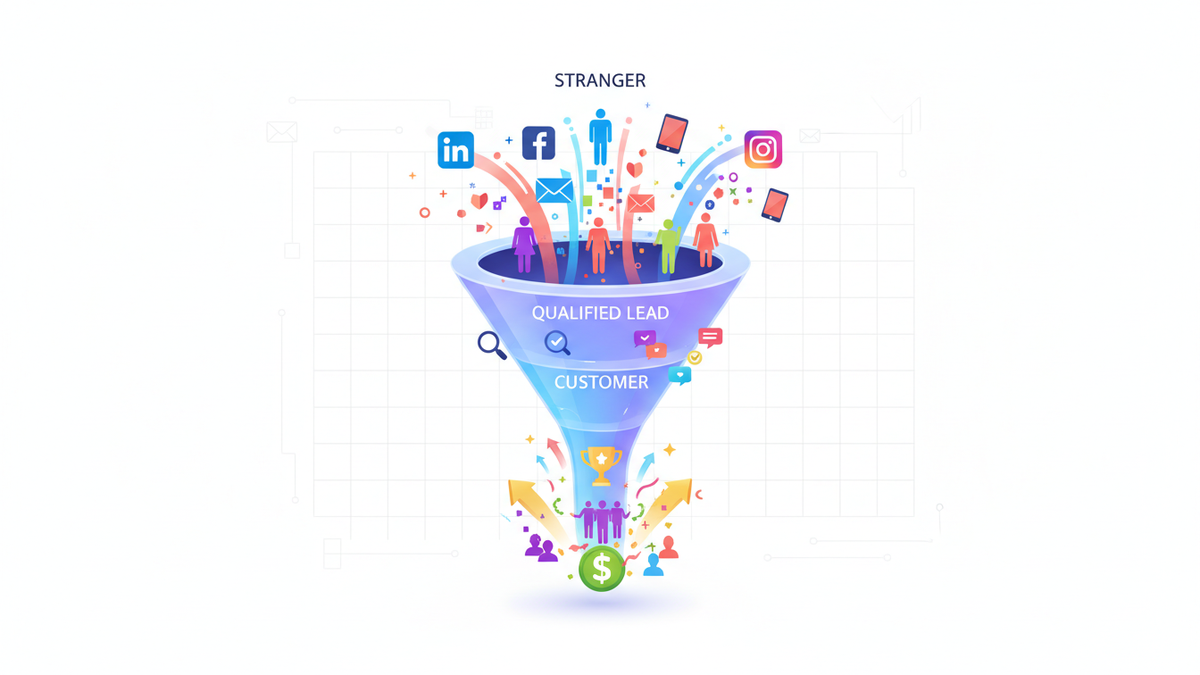
Lead generation explained in its simplest form is a multi-stage process that transforms complete strangers into interested prospects. Understanding how to generate leads effectively requires mastering each stage of this journey.
Stage 1: Attraction The process begins by attracting your target audience through various channels. This might include content marketing (blogs, videos, podcasts), search engine optimization, paid advertising, social media engagement, or events and webinars. The goal is to create awareness and draw potential customers into your ecosystem.
Stage 2: Conversion Once you've attracted visitors, the next step is converting them into leads by capturing their information. This typically happens through:
- Landing pages with compelling offers
- Lead magnets (e-books, whitepapers, templates)
- Webinar registrations
- Free trials or demos
- Newsletter subscriptions
- Contact forms
The key is offering something valuable enough that prospects willingly exchange their contact information for it.
Stage 3: Qualification Not all leads are created equal. This stage involves assessing which leads are most likely to become customers. Lead scoring yields a 77% ROI lift (138% with scoring vs. 78% without), yet only 44% of companies currently use it. This represents a massive opportunity for businesses willing to implement systematic qualification processes.
Stage 4: Nurturing Qualified leads rarely convert immediately. The nurturing stage involves building relationships through targeted communications, educational content, and personalized outreach. Nurturing emails yield 4-10x higher responses and can cut cost per lead by 33%, making this stage crucial for maximizing return on investment.
What Is the Difference Between a Lead and a Prospect?
Understanding the distinction between leads and prospects is fundamental to effective sales and marketing alignment. While these terms are often used interchangeably, they represent different stages in the customer journey.
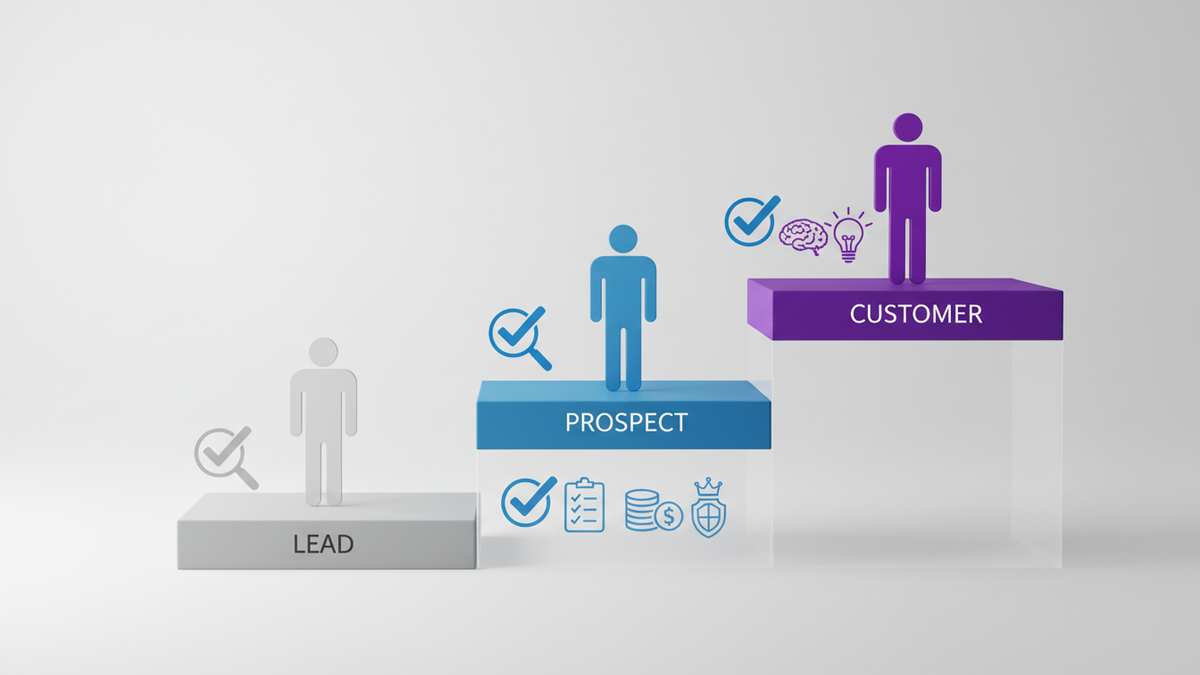
A lead is any individual or company showing initial interest in your product or service. This might be someone who downloaded a whitepaper, visited your website, or clicked on an ad. Leads are at the top of the funnel and haven't been thoroughly vetted against your ideal customer criteria.
A prospect, on the other hand, is a qualified lead that has been vetted and meets your ideal customer profile (ICP). Prospects demonstrate deeper fit and buying intent—they might have requested a demo, engaged in meaningful conversations with your team, or shown clear signals that they have the need, budget, and authority to make a purchase.
The journey typically flows: leads → nurturing → prospects → qualified opportunities. This distinction matters because it helps teams prioritize their efforts effectively. Sales teams focusing on prospects rather than raw leads achieve higher conversion rates and faster sales cycles.
What Are the Types of Leads?
Leads can be categorized in several ways, each requiring different approaches:
Marketing Qualified Leads (MQLs): These are leads who have engaged with your marketing efforts and shown interest but aren't yet ready for direct sales contact. They might have downloaded multiple resources, attended a webinar, or repeatedly visited key pages on your website.
Sales Qualified Leads (SQLs): These leads have been vetted by sales teams and are deemed ready for direct sales engagement. They've demonstrated clear buying intent and fit your ideal customer profile. The average MQL-to-SQL conversion rate is 13%, though top performers achieve 35-45%.
Product Qualified Leads (PQLs): Common in SaaS and software businesses, these are users who have experienced your product (often through a free trial) and shown behavior indicating they're likely to become paying customers.
Service Qualified Leads: These are customers or contacts who have indicated interest in becoming paying customers, often through direct inquiry about your services.
Understanding these lead types helps businesses create appropriate nurture tracks and allocate resources efficiently across the demand generation process.
Lead Generation Strategies: What Works in 2024-2025
Content Marketing and SEO: The Foundation of Qualified Lead Generation
When exploring how to generate leads for your business, content marketing and SEO emerge as the most effective long-term strategies. 80% of B2B firms use content marketing, generating 3x more leads than outbound methods at significantly lower cost.
The data speaks volumes about SEO's effectiveness: SEO leads close at 14.6%, compared to just 1.7% for outbound leads. Companies prioritizing SEO are 13x more likely to see positive ROI, making it one of the most reliable methods to generate qualified leads.
Here's why content marketing works so well for lead generation:
Authority Building: Publishing valuable, informative content positions your business as an industry expert, building trust before prospects ever speak with your sales team.
Long-Term Asset Creation: Unlike paid advertising that stops working when you stop paying, quality content continues attracting and converting visitors months or even years after publication. Blogs produce 67% more leads for companies that maintain them consistently.
Search Intent Alignment: Content optimized for specific search queries captures prospects at the exact moment they're looking for solutions, resulting in higher-quality leads with genuine interest.
Scalable Lead Generation: Once your content library reaches critical mass, it creates a compounding effect where each new piece amplifies the discovery of your existing content.
To create leads effectively through content, focus on addressing the specific questions and pain points your target audience faces throughout their buyer's journey.
How to Generate Leads Online: Multi-Channel Approaches
Generating leads online in 2024-2025 requires a sophisticated multi-channel strategy that meets prospects where they already spend their time. Here are the most effective channels:
Email Marketing Lead Generation: Despite predictions of its demise, email remains exceptionally effective. Nurturing email campaigns reduce cost per lead by 33% and generate response rates 4-10x higher than standalone outreach. The key is segmentation and personalization based on behavior and preferences.
Social Media Lead Generation: Social platforms contribute 31% of B2B lead volume, with paid social generating 2x more leads than organic. However, different platforms serve different purposes:
- LinkedIn excels for B2B lead generation with 3.2% conversion rates on ads
- Facebook and Instagram work well for B2C and retargeting (boosting conversions up to 70%)
- Twitter/X serves as a thought leadership and engagement platform
Paid Advertising: Search ads average 5% conversion rates, and paid search drives 65% of high-intent B2B leads. The investment in paid channels makes sense when you consider the average cost per lead across industries is $198, with B2B variations ranging from $173 (marketing agencies) to $235 (industrial/manufacturing).
Video Marketing: With 78% of businesses using video content and over 50% increasing their investment, video has become essential for lead generation. Video content increases engagement by 34% and serves multiple purposes from awareness to product demonstrations.
B2B Lead Generation and Account-Based Marketing
For those wondering what is b2b lead generation and how to generate b2b leads specifically, the landscape has evolved significantly toward account-based marketing (ABM) strategies.
ABM flips traditional lead generation on its head by identifying high-value target accounts first, then creating personalized campaigns to engage multiple stakeholders within those organizations. This approach has proven remarkably effective: companies implementing ABM achieve 35-45% MQL-to-SQL rates compared to the 13% average.
How do you generate leads through ABM?
Ideal Customer Profile Development: Define precisely which companies represent your best-fit customers based on firmographics, technographics, and behavioral characteristics.
Intent Data Utilization: 99% of large firms use intent data, with 94% reporting higher-quality leads. This data reveals which accounts are actively researching solutions in your category.
Multi-Stakeholder Engagement: B2B buying committees now involve an average of 6-10 decision-makers. Successful ABM campaigns coordinate messaging across multiple contacts within target accounts.
Rapid Response: When intent signals appear, speed matters. Organizations responding to buying signals within 1 hour generate 7x more conversations than those who wait longer.
The rise of ABM reflects a broader shift in how to generate quality leads: moving from high-volume, low-quality approaches to targeted, personalized strategies that attract better-fit prospects.
The AI and Automation Revolution
No discussion of modern lead generation strategies for beginners would be complete without addressing artificial intelligence and automation. These technologies are fundamentally transforming how businesses get more leads and qualify them efficiently.
Current Adoption and Impact: Between 59-71% of marketers use AI weekly in their lead generation efforts, generating 50% more leads at lower costs. Marketing automation boosts lead volume by up to 451%, while AI-powered chatbots handle 80% of initial qualification conversations.
AI Lead Scoring: Traditional lead scoring required manual point assignment and constant refinement. AI-powered predictive scoring analyzes thousands of data points to identify which leads are most likely to convert, improving conversions by 20-30%. Despite these benefits, only 44% of companies currently use lead scoring, creating a significant competitive advantage for early adopters.
Personalization at Scale: AI enables hyper-personalization that was previously impossible. Systems can now customize email content, website experiences, and ad creative based on individual behavior, preferences, and stage in the buyer's journey. This personalization is crucial since 73% of buyers actively avoid irrelevant outreach.
Chatbots and Conversational Marketing: AI chatbots provide immediate engagement 24/7, qualifying leads through natural conversation and scheduling meetings with sales teams automatically. This solves the critical timing challenge, as prospects increasingly expect instant responses.
The integration of AI represents one of the most significant shifts in how to generate leads in sales, enabling teams to work smarter rather than harder while improving both quantity and quality of leads for business growth.

How Leads Buddha Helps Businesses Master Lead Generation
Addressing the Quality Challenge Head-On
Remember that statistic from earlier—61% of marketers struggle with lead generation, and 37% specifically can't find high-quality leads? This is precisely the challenge Leads Buddha was built to solve.
Leads Buddha provides businesses with comprehensive tools and resources designed specifically to generate leads and engage potential customers more effectively. Rather than leaving companies to piece together fragmented solutions, Leads Buddha offers an integrated approach that addresses the full spectrum of lead generation challenges.
The platform recognizes that quality trumps quantity every time. While many tools focus solely on increasing lead volume, Leads Buddha emphasizes attracting prospects who are genuinely interested and qualified. This alignment with modern lead generation best practices means businesses using Leads Buddha's solutions can expect higher conversion rates throughout their sales funnel—from initial contact through closed deals.
Leveraging Modern Lead Generation Technologies
In an era where AI and automation dominate successful lead generation strategies, Leads Buddha equips businesses to compete effectively against larger competitors with bigger budgets. The platform's approach aligns with current market trends including:
Multi-Channel Integration: Rather than forcing businesses to manage separate tools for email marketing lead generation, social media, content distribution, and paid advertising, Leads Buddha enables coordinated campaigns across channels. This integration is critical, as prospects now require multiple touchpoints across platforms before converting.
Automation Capabilities: By automating repetitive elements of lead capture, nurturing, and scoring, Leads Buddha allows marketing and sales teams to focus their human expertise where it matters most—building relationships and closing deals. This efficiency gain is particularly valuable given that automation can boost lead volume by up to 451%.
Data-Driven Optimization: Leads Buddha provides the analytics and insights needed to continuously improve lead generation performance. Teams can identify which channels, messages, and offers drive the highest-quality leads, then double down on what works while eliminating wasted effort.
For businesses wondering where to generate leads in today's complex digital landscape, Leads Buddha simplifies the process by providing proven frameworks and tools that work across industries.
Improving Conversion at Every Stage
The average visitor-to-lead conversion rate of 2-5% leaves significant room for improvement. Leads Buddha focuses on optimizing conversion pathways to ensure businesses extract maximum value from their traffic and outreach efforts.
Landing Page Optimization: Every lead generation campaign needs high-converting landing pages. Leads Buddha's resources help businesses create pages that clearly communicate value propositions, reduce friction, and compel visitors to take action.
Rapid Response Systems: Given that 5-minute follow-up times make teams 9x more likely to convert leads, Leads Buddha enables the automation and routing necessary to ensure prospects receive immediate attention when they express interest.
Lead Nurturing Programs: Since most leads aren't ready to buy immediately, systematic nurturing is essential. Leads Buddha helps businesses develop segmented nurture tracks that deliver the right message at the right time, moving prospects toward purchase decisions organically rather than through high-pressure tactics.
Sales-Marketing Alignment: Perhaps most importantly, Leads Buddha facilitates the alignment between sales and marketing teams that drives results. Companies with aligned teams achieve 38% higher win rates and 24% faster revenue growth—yet only 35% currently report alignment. By providing shared dashboards, clear handoff processes, and unified definitions of lead quality, Leads Buddha helps bridge this critical gap.
For businesses serious about learning how to get leads consistently and convert them efficiently, Leads Buddha offers the infrastructure, knowledge, and support needed to build a sustainable lead generation system.
Actionable Takeaways: How to Get Started with Lead Generation
Now that you understand what lead generation is and why it matters, here are five practical steps you can implement immediately to start generating more and better leads for your business:
1. Define Your Ideal Customer Profile and Buyer Personas
Before you can effectively generate leads for business growth, you need crystal clarity on who you're targeting. Create detailed profiles including:
- Demographics and firmographics
- Pain points and challenges
- Goals and aspirations
- Buying behavior and decision-making processes
- Preferred communication channels
This foundation ensures every lead generation tactic attracts the right prospects rather than wasting resources on poor-fit leads.
2. Implement Lead Scoring to Prioritize Your Efforts
Given that lead scoring delivers a 77% ROI lift yet only 44% of companies use it, implementing even a basic scoring system creates immediate competitive advantage. Start simple:
- Assign points for desired behaviors (email opens, website visits, content downloads)
- Add demographic/firmographic fit scores
- Subtract points for disqualifying characteristics
- Set thresholds for when leads should be passed to sales
As you gather data, refine your scoring model to reflect which characteristics actually predict conversions.
3. Create a Content Marketing Engine
With content marketing generating 3x more leads than outbound at lower cost, building a content library should be a priority. Focus on:
- Addressing your target audience's most pressing questions
- Optimizing for search intent to capture high-quality organic traffic
- Creating gated premium content (guides, templates, tools) that warrant contact information exchange
- Publishing consistently to build momentum
Remember: SEO leads close at 14.6% compared to 1.7% for outbound, making content one of your highest-ROI investments.
4. Build Speed into Your Follow-Up Process
Since 5-minute response times make you 9x more likely to convert leads, eliminate delays in your process:
- Set up automated email responses confirming receipt of inquiries
- Implement instant notifications to sales reps when hot leads appear
- Use chatbots to engage website visitors immediately
- Create clear routing rules so leads reach the right person instantly
Speed demonstrates professionalism and captures prospects while their interest is highest.
5. Align Your Sales and Marketing Teams
With aligned teams achieving 38% higher win rates, this alignment might be the highest-leverage improvement you can make:
- Create shared definitions of lead quality and qualification criteria
- Establish clear handoff processes from marketing to sales
- Implement regular meetings to review lead quality and conversion data
- Build feedback loops so sales insights inform marketing strategy
- Use shared dashboards for visibility into the entire funnel
This alignment ensures marketing generates leads that sales actually wants to pursue, eliminating friction and maximizing conversion rates.
Conclusion: Your Lead Generation Journey Starts Now
Understanding what is lead generation is just the beginning. As we've explored throughout this guide, lead generation is far more than a marketing tactic—it's the strategic foundation that determines whether businesses thrive or merely survive.
The statistics paint a clear picture: companies that master lead generation through content marketing, SEO, AI-powered personalization, and sales-marketing alignment consistently outperform their competitors. They convert visitors at 5-10% instead of 2-5%. They close SEO-generated leads at 14.6% instead of 1.7%. They achieve 35-45% MQL-to-SQL rates instead of 13%.
The question isn't whether to invest in lead generation—61% of marketers already cite it as their greatest challenge, and 53% allocate at least half their budget to it. The question is whether you'll implement the strategies, technologies, and processes that separate top performers from the average.
As the B2B lead generation market expands toward $13.8 billion by 2033, growing at 9.3% annually, the businesses that establish systematic, data-driven approaches now will compound their advantages over time. Your content library will grow, your lead scoring will improve, your conversion rates will climb, and your cost per lead will decrease.
Leads Buddha exists to accelerate this journey, providing the tools, resources, and expertise businesses need to generate qualified leads consistently and convert them efficiently. Whether you're just beginning to explore lead generation basics or ready to scale an existing program, the path to sustainable business growth runs through mastering this critical discipline.
The lead generation landscape will continue evolving—new channels will emerge, AI will become more sophisticated, and buyer behaviors will shift. But the fundamentals remain constant: understand your audience, provide genuine value, respond with speed, and optimize relentlessly based on data.
Your next customer is out there searching for solutions right now. The question is: will they find you?
---
Ready to transform your lead generation results? Discover how Leads Buddha can help you attract, qualify, and convert more high-quality leads for sustainable business growth.