Lead Qualification: BANT vs. MEDDIC for B2B Sales Success
leadsbuddha
Lead Qualification: BANT vs. MEDDIC for B2B Sales Success
Introduction
Here's a sobering reality: only 21% of sales teams are satisfied with their lead quality, with poor lead qualification being the top reason for lost deals. If you're among the frustrated majority watching promising prospects stall in your pipeline, you're not alone—and more importantly, you're not without solutions.
Lead qualification is the difference between spinning your wheels on tire-kickers and closing deals with ready-to-buy customers. Yet most B2B sales teams still rely on gut instinct rather than proven qualification frameworks. The cost? An average of $600K annually in wasted resources from marketing and sales misalignment.
In this comprehensive guide, we'll compare the two most powerful sales qualification frameworks—BANT and MEDDIC—so you can systematically identify high-value prospects, shorten your sales cycle, and build a predictable pipeline. You'll learn exactly when to use each framework, how to implement them in your sales process, and why combining traditional qualification with modern predictive scoring delivers the best results.
The State of Lead Qualification in B2B Sales
Why Most Sales Teams Struggle with Qualification
The B2B sales landscape has grown exponentially more complex. Decision-making units now involve 6-10 stakeholders on average, buying cycles stretch across multiple quarters, and competitive pressure forces sales teams to chase every lead that shows a pulse.
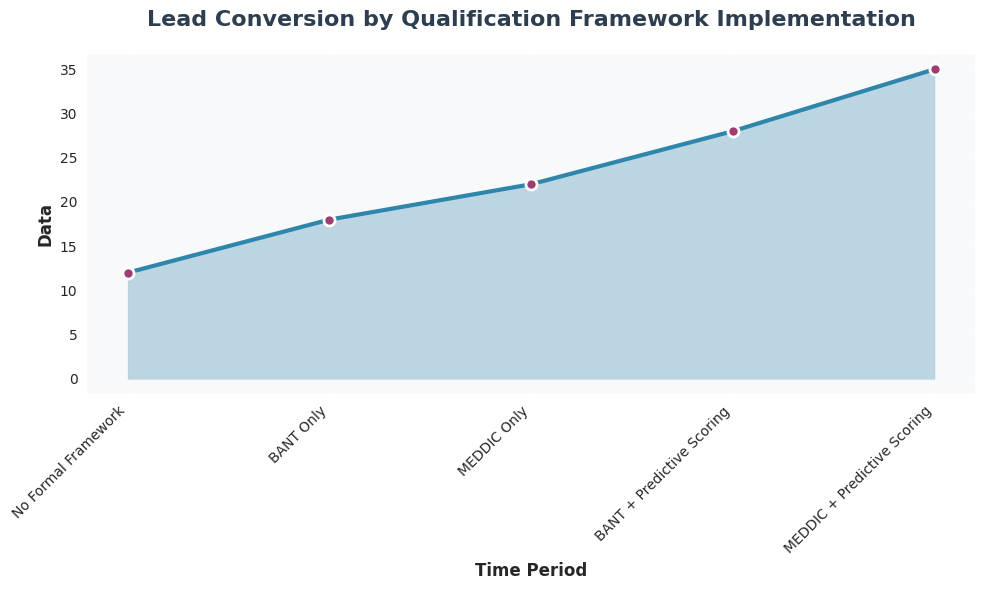
The data paints a clear picture: B2B companies that implement formal lead qualification see a 50% reduction in sales cycle length and 30% improvement in close rates. Yet the majority of organizations still operate without structured qualification criteria, resulting in bloated pipelines filled with prospects who will never convert.
Consider this: sales-qualified leads (SQLs) generated through structured qualification frameworks have 3-5x higher close rates compared to unqualified leads. The math is simple—investing time upfront to qualify prospects properly saves weeks or months of wasted pursuit later.

The Rise of Formal Sales Qualification Frameworks
High-performing sales teams have figured this out. According to HubSpot's 2024 State of Sales Report, 73% of top-performing sales teams use formal lead qualification frameworks like BANT, MEDDIC, or similar methodologies to structure their sales processes.
This shift from implicit to explicit qualification represents a fundamental change in how B2B organizations approach sales pipeline management. Rather than relying on individual sales reps' judgment, leading companies document repeatable frameworks with clear scoring criteria that create predictability across the entire sales funnel.
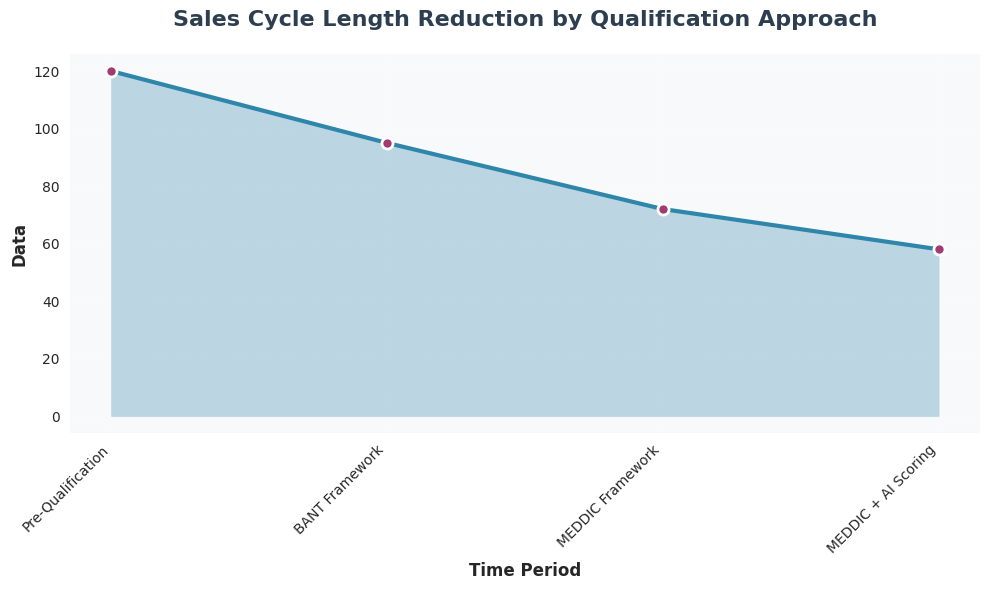
The trend extends beyond traditional frameworks. 84% of top-performing sales organizations now use predictive lead scoring combined with traditional frameworks like BANT to improve conversion. This marriage of human judgment and AI-powered analytics captures patterns that even experienced reps might miss.
Understanding Lead Qualification Frameworks: BANT vs. MEDDIC
What is BANT in Sales?
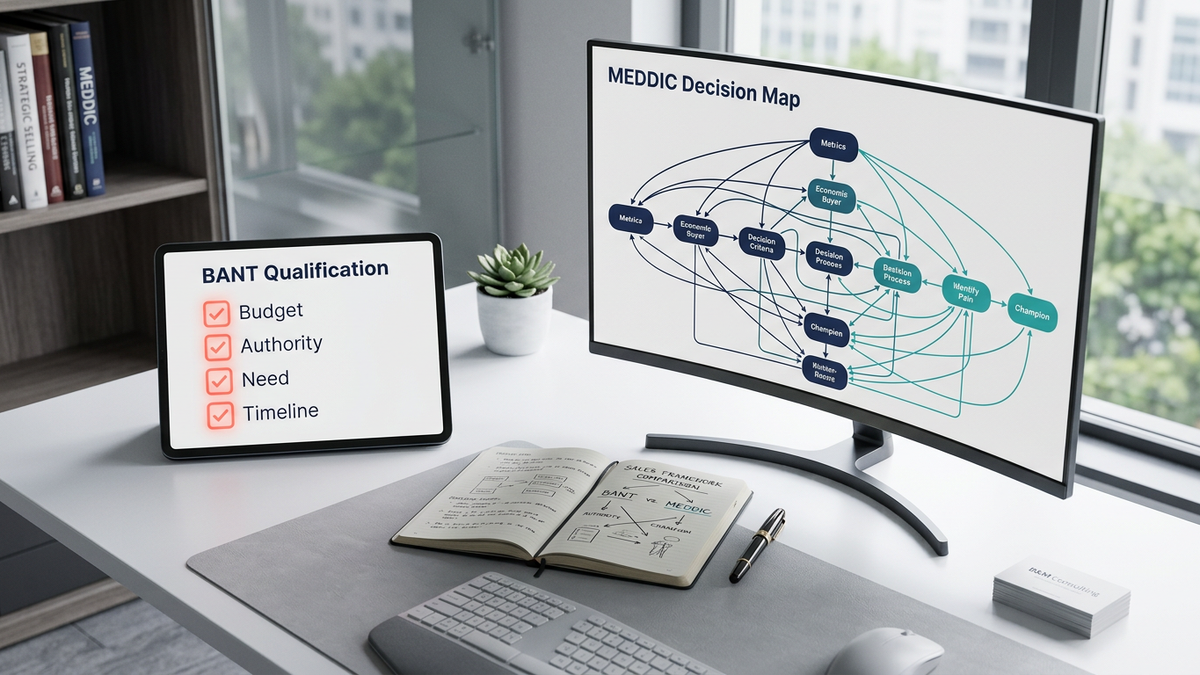
BANT is the veteran of sales qualification frameworks, developed by IBM in the 1960s and still widely used today. The acronym stands for Budget, Authority, Need, and Timeline—four critical dimensions that determine whether a prospect is ready to buy.
Budget: Does the prospect have financial resources allocated for this purchase? Authority: Are you speaking with the decision-maker who can approve the deal? Need: Does the prospect have a genuine business problem your solution addresses? Timeline: When does the prospect plan to make a purchase decision?
The BANT framework works exceptionally well for transactional sales with shorter cycles and straightforward decision-making processes. As Mark Roberge, VP of Sales & Marketing Strategy at HubSpot, explains: "The BANT framework works well for transactional sales, while MEDDIC excels in complex enterprise deals where you need to understand decision-making units and economic buyers."
What does BANT stand for in sales beyond just an acronym? It represents a systematic approach to prospect qualification that ensures sales reps invest time in opportunities with real potential rather than chasing dead ends.
The MEDDIC Sales Methodology Explained
MEDDIC takes qualification several layers deeper, making it the framework of choice for complex B2B sales. Developed by Jack Napoli at PTC in the 1990s, MEDDIC stands for Metrics, Economic Buyer, Decision Criteria, Decision Process, Identify Pain, and Champion.
Metrics: What quantifiable business impact will your solution deliver? Economic Buyer: Who controls the budget and has ultimate purchasing authority? Decision Criteria: What formal and informal criteria will the prospect use to evaluate solutions? Decision Process: What is the step-by-step process the organization follows to make this purchase? Identify Pain: What specific, urgent business pain is driving this purchase? Champion: Who internally is selling your solution on your behalf?
Companies using the MEDDIC framework see 40-50% improvement in sales cycle length and 25-30% higher win rates on complex deals, according to SiriusDecisions 2023 research. These aren't marginal gains—they're transformative improvements that directly impact revenue.
95% of enterprise sales teams using MEDDIC for complex B2B deals report improved pipeline visibility and predictability. The framework's granular approach to understanding the buyer's decision-making unit and internal politics provides sales reps with actionable intelligence at every stage.

What is a Sales Qualified Lead (SQL) and How Do You Identify One?
A sales qualified lead (SQL) is a prospect who has been vetted against specific qualification criteria and deemed ready for direct sales engagement. The distinction between a marketing qualified lead (MQL) and an SQL is critical—MQLs show interest and engagement, while SQLs demonstrate genuine buying intent and capability.
Identifying SQLs requires consistent application of your chosen qualification framework. Using BANT, an SQL might be a prospect who has confirmed budget availability, identified the decision-maker, articulated a clear business need, and established a purchase timeline within the next quarter.
With MEDDIC sales methodology, SQL identification goes deeper. You're looking for prospects who can quantify the business impact (Metrics), have connected you with the Economic Buyer, shared their Decision Criteria and Process, articulated urgent pain, and ideally identified an internal Champion advocating for your solution.
MEDDIC vs BANT: Key Differences and When to Use Each
The fundamental difference between BANT vs MEDDIC lies in complexity and depth. BANT provides a quick, straightforward qualification checkpoint suitable for simpler B2B sales processes. MEDDIC requires more discovery effort but delivers far greater insight into complex enterprise opportunities.
Use BANT when:
- Your average deal size is under $50K
- Sales cycles are 1-3 months
- Decision-making involves 1-3 people
- Your product/service is relatively straightforward
- You need to qualify high volumes of leads quickly
Use MEDDIC when:
- Average deal size exceeds $100K
- Sales cycles span 6-12+ months
- Multiple stakeholders and departments are involved
- You're displacing existing solutions or processes
- Understanding internal politics is critical to winning
Understanding MEDDPICC: The Extended Framework
For the most complex enterprise sales, some organizations extend MEDDIC to MEDDPICC, adding two additional dimensions:
Paper Process: What is the legal, procurement, and contract approval process? Competition: Who else is being evaluated, and what is your competitive position?
The MEDDPICC sales methodology provides even more comprehensive qualification for seven- and eight-figure deals where contract complexity and competitive dynamics can make or break opportunities.
How Leads Buddha Transforms Lead Qualification
Systematic Framework Integration for Pipeline Excellence
Qualifying leads effectively requires more than just knowing BANT or MEDDIC—you need systems that embed these frameworks directly into your lead generation and engagement processes.
Leads Buddha's Lead Generation Tools enable businesses to systematically capture and score prospects using structured qualification frameworks. Companies can configure BANT and MEDDIC criteria within the platform to automatically qualify leads based on budget indicators, authority signals, need assessment, and buying timeline.
This direct integration of qualification frameworks into lead capture ensures that only sales-ready prospects reach the sales team. Instead of SDRs manually sorting through hundreds of unqualified contacts, the system applies your chosen qualification methodology automatically, improving pipeline efficiency and conversion rates from the first touchpoint.
Consider how this works in practice: when a prospect engages with your content or fills out a form, Leads Buddha's platform can prompt specific qualification questions aligned with BANT ("What's your timeline for implementation?") or MEDDIC ("What metrics would define success for this initiative?"). Responses automatically feed into your lead scoring system, creating an instant qualification snapshot.
Multi-Stage Qualification Throughout the Buyer Journey
One critical mistake organizations make is treating qualification as a single checkpoint. Leading sales teams recognize that qualification should happen progressively as buyers move through their journey.
Through Leads Buddha's customer engagement platform, businesses can implement incremental qualification touchpoints throughout the buyer journey. Rather than qualifying once and moving prospects to sales, companies can build multi-stage engagement workflows that progressively qualify leads using MEDDIC criteria at each interaction point.
For example, early-stage engagement might identify Pain and gather initial Metrics. Mid-funnel interactions could explore Decision Criteria and Process. Later-stage conversations focus on connecting with the Economic Buyer and identifying Champions. This approach captures more qualification data, improves lead quality, and increases visibility into buying unit complexity.
Data-Driven Qualification Refinement
The most sophisticated approach to lead qualification creates continuous improvement loops based on actual outcomes.
Leads Buddha's prospect connection capabilities and sales pipeline building tools allow organizations to create feedback loops between qualification outcomes and future lead generation efforts. By tracking which qualification criteria correlate with actual sales wins and closed deals, companies can refine their targeting and engagement strategies to focus on prospects with the highest BANT or MEDDIC alignment.
This data-driven approach to qualification helps continuously improve lead quality and sales pipeline composition. You might discover, for example, that prospects who score high on MEDDIC's "Champion" criterion close 40% faster, leading you to prioritize identifying internal advocates earlier in your sales process.
Actionable Steps to Implement Lead Qualification Frameworks
1. Choose Your Framework Based on Sales Complexity
Audit your current sales process honestly. Calculate your average deal size, typical sales cycle length, and number of decision-makers involved. If you're selling to SMBs with straightforward purchases, start with BANT. If you're pursuing enterprise accounts with complex buying committees, implement MEDDIC or MEDDPICC.
2. Create Alignment Between Marketing and Sales
Pete Gracian, Founder of Sales Hacker, emphasizes: "Organizations often fail at lead qualification not because they lack a framework, but because sales and marketing don't agree on what constitutes a qualified lead."
Schedule a working session with both teams to document exactly what qualifies as an SQL using your chosen framework. Create a shared definition with specific, measurable criteria that both teams commit to following.

3. Build Qualification Questions Into Every Stage
Map your buyer journey stages and identify where each qualification criterion can be naturally gathered. Early discovery calls might cover Need and Pain. Demo conversations can explore Decision Criteria and Process. Pricing discussions naturally surface Budget and Economic Buyer.
Create talk tracks and email templates that include these questions so reps consistently gather qualification data.
4. Integrate Predictive Scoring with Traditional Frameworks
Jacco van der Kooij, Sales Strategist at SiriusDecisions, notes: "Sales teams that overlay their traditional frameworks (BANT/MEDDIC) with machine learning models see 40% improvement in lead-to-opportunity conversion rates."
If you're using a CRM or sales engagement platform, explore predictive lead scoring capabilities that can supplement your BANT or MEDDIC assessment with behavioral signals and engagement patterns.
5. Review and Refine Based on Win/Loss Data
Quarterly, analyze your closed-won and closed-lost opportunities to identify patterns. Which qualification criteria were strongest in deals you won? Where were gaps in deals you lost? Use these insights to weight your qualification scoring and refine your approach continuously.
Conclusion: Building a Predictable Pipeline Through Better Qualification
Lead qualification isn't just a sales best practice—it's the foundation of predictable revenue growth. Whether you choose BANT for straightforward sales motions or MEDDIC for complex enterprise deals, implementing a formal qualification methodology transforms your pipeline from a guessing game into a forecasting engine.
The data is undeniable: companies using structured qualification frameworks see 50% shorter sales cycles, 30% higher close rates, and dramatically improved pipeline quality. The investment in learning and implementing these methodologies pays dividends in every deal you pursue.
Leads Buddha's lead generation and customer engagement tools provide the infrastructure to systematically qualify prospects throughout their buying journey, ensuring your sales team focuses time and energy on opportunities with real potential. By embedding qualification frameworks into your lead capture and engagement processes, you create a competitive advantage that compounds over time.
The future of B2B sales belongs to organizations that combine proven qualification methodologies with modern technology and data-driven insights. Start today by choosing the framework that matches your sales complexity, aligning your teams around shared qualification criteria, and building systems that make qualification a natural part of every prospect interaction.
Your pipeline—and your revenue—will thank you.