Harnessing AI for Smarter Lead Generation in 2026
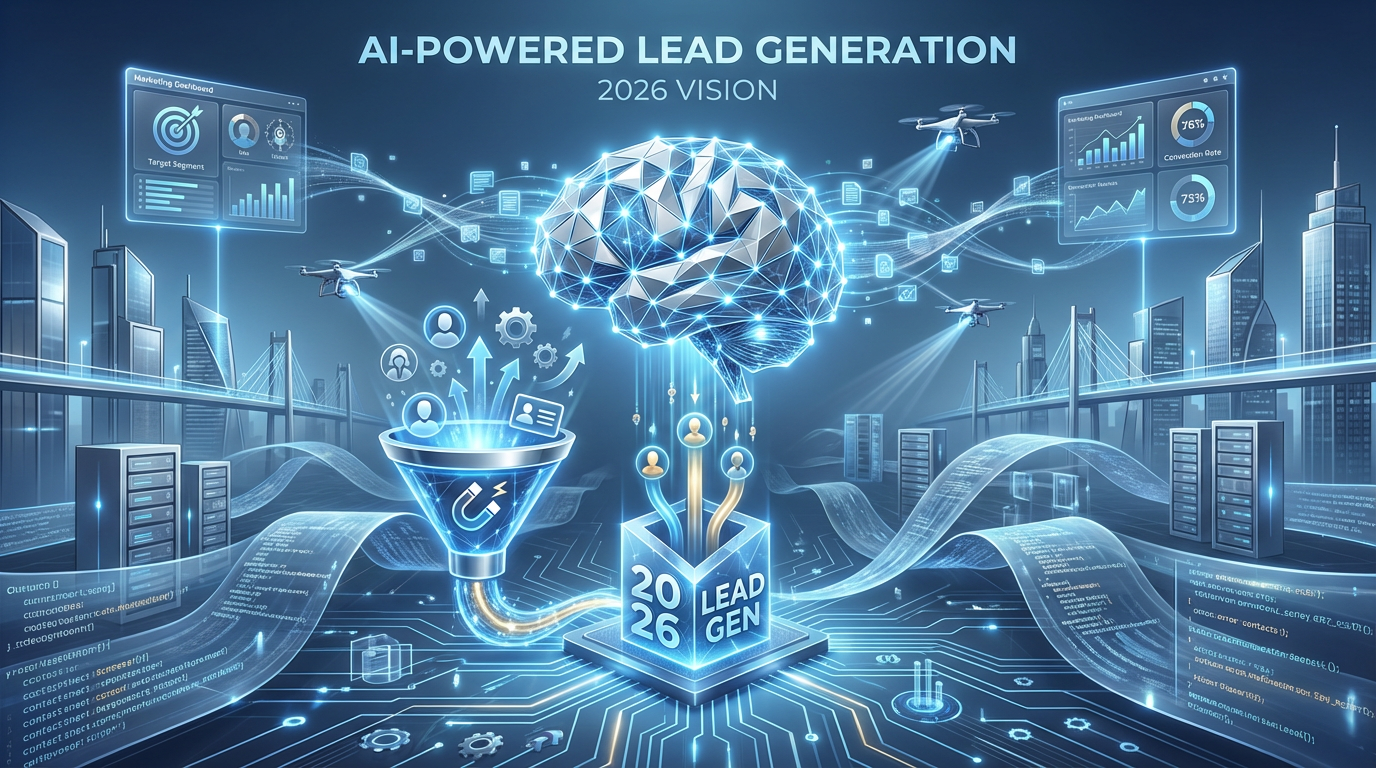
Explore the Future of AI in Lead Generation by 2026
Harnessing AI for Smarter Lead Generation in 2026
Introduction
The future of lead generation is here, and it's powered by artificial intelligence (AI). As we look towards 2026, the marketing landscape is set to be revolutionized by AI technologies, transforming how businesses engage with prospective clients. In this blog post, we'll explore the current trends, predictions, and data insights, showcasing how AI is the key to smarter, more efficient lead generation strategies.
The Rise of AI in Lead Generation
AI's role in marketing has been steadily increasing. A line chart illustrating 'AI Adoption and Growth in Lead Generation (2021-2026)' reveals a promising trajectory, with adoption rates soaring from 15% in 2021 to a projected 88% by 2026 [1][2]. This surge underscores a significant shift towards technology-driven processes that promise to optimize marketing efforts and drive better outcomes. !Line chart showing AI adoption and growth in lead generation (2021-2026) with data visualization for percentage of companies using AI (%)
Case Studies: AI Success Stories
Businesses leveraging AI for lead generation are already reporting impressive results. Predictive analytics enable companies to predict consumer behavior and personalize marketing approaches at scale [3]. The 'Comparison of Lead Conversion Rates: AI vs. Traditional Methods (2026)' bar chart highlights that predictive analytics and hyper-personalization strategies drive conversion rates up to 70%, compared to just 40% with traditional methods [4][5]. !Bar chart showing comparison of lead conversion rates: AI vs. traditional methods (2026) with data visualization for lead conversion rate (%)
Sales engagement tools utilizing conversational AI enhance interaction quality with potential leads, ensuring higher response and meeting booking rates [5]. For instance, Drift's conversational AI tools, depicted in a pie chart titled 'Market Share of AI Tools in B2B Sales (2026)', command a significant portion of the market, indicating a strong preference for solutions that increase engagement quality.
Emerging Trends and Technologies
The AI-driven landscape is continuously evolving. As companies prepare for 2026, they're focused on incorporating more sophisticated technologies like quantum computing and augmented reality/virtual reality (AR/VR) to provide immersive and real-time data processing capabilities. These innovations are designed to offer businesses enhanced strategic targeting and customer engagement methods [3].
Data-Driven Decisions and Market Implications
The market implications of AI-led strategies are profound. Not only do these processes, as indicated in data insights, lead to increased conversion rates and reduced acquisition costs, but they also facilitate larger deal sizes [4]. Additionally, there's a noticeable shift towards domain-specific solutions, as buyers increasingly favor bespoke AI applications tailored to distinct industry needs [2][5].
The cumulative impact of AI on lead conversion rates over time, as represented in an area chart, shows steady improvement – a compelling reason for businesses to invest in AI technologies now.
Conclusion and Actionable Takeaways
By 2026, AI will not be merely an add-on for savvy marketers but an integral part of comprehensive marketing strategies. As lead generation becomes more complex, the adoption of AI will be essential. To remain competitive:
Invest in AI technologies that align with your business goals.
Prioritize data-driven decision-making processes.
Focus on developing personalized marketing strategies augmented by AI.
Stay updated on technological advancements like quantum computing and AR/VR to enhance capabilities.
As we edge closer to 2026, the businesses that leverage AI will be at the forefront of the lead generation revolution, capitalizing on more meaningful customer relationships and improved conversion rates.