The Future of Marketing: AI vs Human-Led Campaigns
10ex
The Future of Marketing: AI vs Human-Led Campaigns
Introduction
The marketing landscape is experiencing a seismic shift. In just two years, marketer adoption of AI for marketing has surged from 63% to 91%—a transformation that fundamentally challenges how campaigns are conceived, executed, and optimized. Yet this explosive growth masks a deeper question: Is AI replacing human creativity, or is it amplifying it?
The answer is neither simple nor binary. According to McKinsey's 2025 research, AI-powered marketing strategies are projected to drive $463 billion in productivity gains globally. Companies like Klarna are already realizing tangible benefits, reducing their annual sales and marketing costs by 11%, with AI accounting for $10 million (37%) of these savings. Meanwhile, organizations like Coca-Cola and Nike are leveraging generative AI not to replace their creative teams, but to empower them—enabling faster iteration, deeper personalization, and unprecedented customer engagement.
This comprehensive guide explores the evolving relationship between artificial intelligence and human expertise in modern marketing. We'll examine the current state of AI-driven marketing, analyze real-world case studies, and reveal how forward-thinking organizations are blending automation with strategy to achieve results that neither approach could deliver independently. Whether you're a marketing specialist exploring AI adoption or a digital marketing manager seeking to optimize your team's capabilities, this exploration of digital marketing with AI will help you navigate one of the most significant transformations in the industry.
The Problem/Landscape: Understanding the AI Revolution in Marketing
The Current State of AI Adoption
The numbers are staggering. As of 2025, 94% of marketers now utilize AI in some form, leaving only 6% who have yet to adopt it. This isn't merely a trend among enterprise-level organizations—even small and medium-sized businesses are increasingly integrating AI into their marketing automation workflows. According to McKinsey, 88% of businesses regularly use AI across their operations, fundamentally reshaping how marketing departments operate.
But what does this widespread adoption actually mean? The reality is more nuanced than headlines suggest. Marketers are deploying AI across diverse functions: content generation, campaign optimization, personalization, ad management, and analytics. The AI in marketing market is expanding at a remarkable CAGR of 26.7% and is projected to reach 31.7% of total marketing spend within five years—up from the current 19%. This represents a seismic shift in how marketing budgets are allocated.
The Business Impact: Efficiency and Revenue Growth
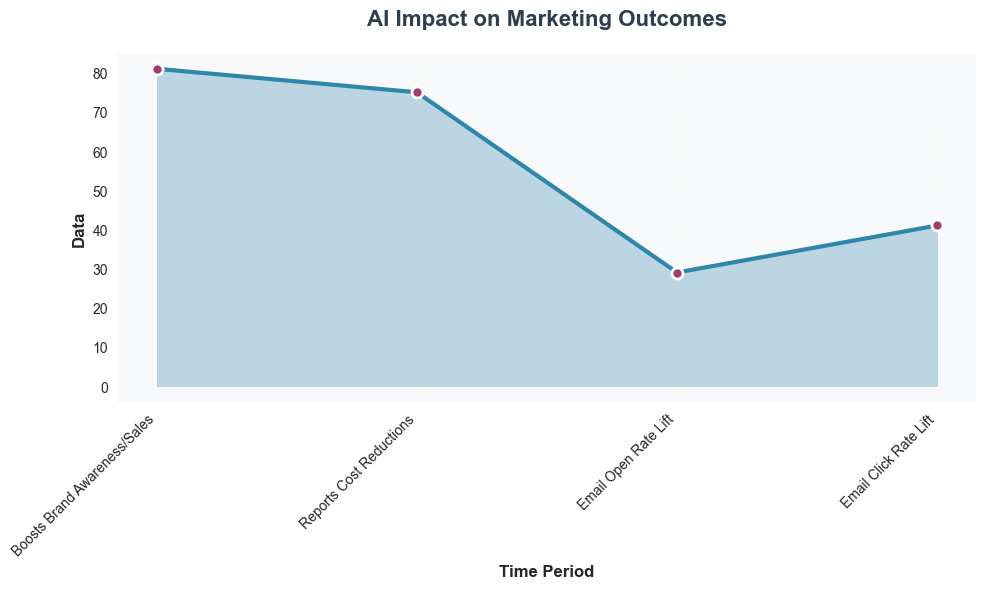
Why are so many organizations investing in AI-powered solutions? The answer lies in measurable results. Eighty-one percent of US marketers report that AI boosts both brand awareness and sales, while 75% cite significant cost reductions. These aren't theoretical benefits—they're being realized in real campaigns across industries.
Consider the numbers on marketing productivity: Organizations leveraging AI-driven personalization are experiencing a 29% increase in email open rates and a 41% increase in click-through rates. For businesses operating at scale, these improvements translate directly to revenue. Furthermore, 92% of businesses utilizing AI-powered personalization report efficiency improvements of 10-30%, with some achieving revenue increases of up to 40%.
The Rise of Agentic AI and Autonomous Marketing
While much of today's AI adoption focuses on task automation and content generation, the next frontier—agentic AI—promises even more sophisticated capabilities. Agentic AI refers to autonomous AI agents capable of handling complex, multi-step marketing operations with minimal human intervention. The market for agentic AI is projected to grow from $7-7.29 billion in 2025 to $52.6-139 billion by 2030-2034, representing a 15x increase in value.
This evolution signals a fundamental shift in how marketing will be structured. Rather than AI simply automating repetitive tasks, autonomous agents will handle strategic elements like campaign planning, A/B testing optimization, and real-time budget allocation—processes that currently demand significant human expertise.
Deep Dive: How AI is Transforming Marketing Strategy and Execution
Real-World Case Studies: AI in Action
To understand the practical implications of AI-powered advertising and content creation, examining real-world implementations provides invaluable insights.
Klarna's Cost Revolution: The fintech company demonstrated that AI implementation yields concrete financial benefits. By integrating AI across their marketing operations, Klarna achieved an 11% annual reduction in sales and marketing costs. Remarkably, AI drove 37% of these savings—$10 million in annual cost reduction—proving that AI for marketing transcends efficiency gains and directly impacts the bottom line.
Coca-Cola's Creative Amplification: Rather than replacing creative professionals, Coca-Cola's "Create Real Magic" campaign showcases how brands can leverage generative AI as a creative partner. By inviting consumers to combine ChatGPT, DALL-E, and historic Coca-Cola ad creatives, the campaign increased customer involvement and brand awareness. This demonstrates how generative AI for marketing can extend brand reach beyond traditional campaigns.
Nike's Personalized Customer Experience: Nike's deployment of AI across multiple touchpoints—from their "Never Done Evolving" AI-generated Serena Williams campaign to personalized shoe recommendations through the Nike Fit app powered by artificial intelligence—illustrates the breadth of AI applications. These initiatives work in concert to create a cohesive brand experience that resonates emotionally while delivering functional benefits.
Calm App's Hyper-Personalization Success: Using Amazon Personalize, the meditation app achieved a 3.4% increase in daily app usage by delivering super-personalized content recommendations. This seemingly modest percentage, when applied across millions of users, translates to millions of additional engagement hours and demonstrable business value.
Addressing Key Questions: AI's Role in Modern Marketing
Will AI Replace Human Marketers? Expert consensus suggests no—at least not in the near term. McKinsey's research indicates that while AI will mediate 90% of B2B buying by 2028, human judgment remains essential for strategy, creativity, and ethical decision-making. However, Forrester cautions that 2026 may mark "the end of AI hype," with potential market corrections and warnings about $10 billion in losses from ungoverned AI implementations. This underscores that AI is a tool requiring skilled human stewardship.
What Percentage of Marketing Will Be AI-Driven? The trajectory is clear: AI-powered marketing budgets will comprise 31.7% of total marketing spend within five years. Additionally, 68% of CMOs are deploying or planning to deploy AI for video content creation, with AI-generated ads projected to comprise 40% of all advertising by 2026. Yet this doesn't eliminate human involvement—it redistributes it toward higher-value strategic and creative work.
How Can Organizations Maximize AI ROI? According to Jasper's CMO survey, while AI adoption reaches 91%, many organizations constrain AI's potential through inadequate operating models. The path to high returns (60% of respondents report high ROI) requires rigorous measurement, clear governance, and intentional integration with human expertise.

The Market Opportunity: Scale and Growth
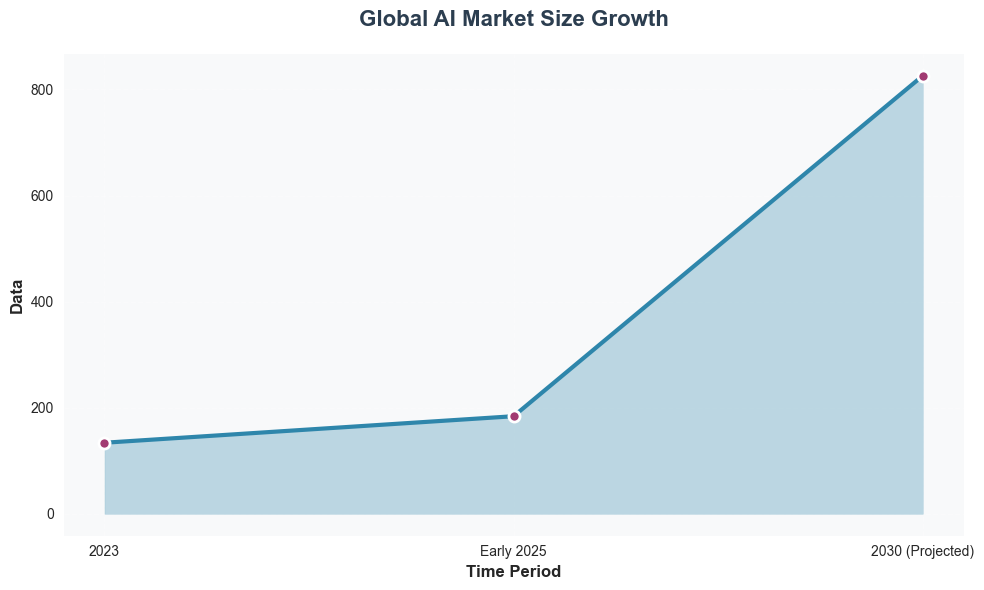
The global AI market size has surpassed 184 billion USD as of early 2025—a dramatic increase from 134 billion USD in 2023. Projections indicate the market will exceed 826 billion USD by 2030, driven primarily by applications in marketing, customer experience, and data analytics. For marketing leaders, this expanding ecosystem means access to increasingly sophisticated tools and platforms that can deliver measurable ROI.
How 10ex.ai Addresses These Marketing Challenges
Automating the Marketing Workflow: From Strategy to Execution
The fundamental challenge facing modern marketing teams is clear: demand for personalized, multi-channel campaigns exceeds the capacity of traditional team structures. Thirty-one percent of marketing budgets will be AI-powered within five years, yet most organizations lack the infrastructure to manage this transition effectively.
10ex.ai's Marketing Campaign Automation directly addresses this challenge. Rather than requiring teams to manually manage campaign creation, execution, and tracking across multiple channels, 10ex.ai's platform automates the entire workflow. Marketing specialists can define campaign parameters and objectives, and the AI-powered system handles the operational complexity—creating variations, testing approaches, and optimizing timing and messaging across email, webinars, and digital advertising.
This automation delivers measurable efficiency gains. Organizations using 10ex.ai report the ability to manage 3-4x more campaigns with the same team size—directly achieving the 75% cost reduction benchmark that leading organizations have reported. By consolidating what traditionally required multiple specialized tools and team members, 10ex.ai enables smaller teams to operate at enterprise scale.
AI-Optimized Ad Management: Maximum Performance at Every Budget Level
Advertising efficiency represents one of the most concrete ROI opportunities in modern marketing. Yet optimizing ad performance across platforms—Google, Meta, LinkedIn, and others—requires constant monitoring, testing, and adjustment. Most organizations lack the resources to execute true continuous optimization.
10ex.ai's Ad Management with AI Optimization applies sophisticated machine learning algorithms to advertising campaigns, continuously learning from performance data and automatically reallocating budget toward highest-performing placements, audiences, and creative approaches. This mirrors Klarna's success in achieving $10 million in AI-driven cost savings—but makes it accessible to businesses of all sizes.
The system generates high-converting ad content using generative AI, eliminating the bottleneck of creative development. For marketing teams managing multiple product lines or geographic markets, this capability multiplies productivity. Rather than creating dozens of ad variations manually, teams can leverage AI to generate variations at scale, test them rapidly, and deploy winners with minimal manual intervention.
Unified Platform for Hyper-Personalization and Data-Driven Decisions
The data reveals a compelling opportunity: AI-driven personalization delivers 29% higher email open rates and 41% higher click rates. Yet achieving true personalization at scale requires sophisticated data infrastructure and decision-making engines. Most organizations maintain separate tools for email marketing, advertising, content management, and analytics—creating siloed data that prevents true personalization.
10ex.ai's consolidated platform approach unifies these channels, enabling genuine 360-degree customer understanding. By consolidating campaign management, advertising, webinar automation, and email marketing into a single AI-powered system, 10ex.ai provides marketers with a unified source of truth. This integration enables the AI engine to make smarter decisions—for instance, recognizing that a prospect engaged with a webinar and automatically personalizing subsequent email content to address topics they demonstrated interest in.
Furthermore, the platform's actionable analytics transform raw data into strategic insights. Rather than requiring data scientists to extract insights from marketing data, 10ex.ai's AI engine surfaces key findings automatically: which segments respond best to which messaging, optimal timing for customer outreach, and early signals of campaign underperformance. This enables the real-time optimization that separates high-performing marketing operations from average ones.
Scaling Marketing Without Scaling Headcount
The fundamental value proposition of 10ex.ai aligns directly with the central challenge facing marketing leaders: how to increase output and sophistication without proportionally increasing costs. By combining marketing automation, AI-powered content creation, and consolidated channel management, 10ex.ai enables what was previously impossible—genuine marketing scale without doubling team size.
For digital marketing managers responsible for revenue impact, this translates to the ability to test new markets, segments, and messaging approaches without requesting additional budget. For product managers evaluating marketing technology, 10ex.ai's unified approach reduces complexity—replacing 4-5 point solutions with a single integrated platform.
Actionable Takeaways: Implementing AI in Your Marketing Strategy
1. Start with High-Impact Automation Opportunities
Not all marketing tasks are equally suited for automation. Begin by identifying repetitive, high-volume processes that consume significant team time: email nurture sequences, social media posting, ad campaign setup, and lead scoring. These processes deliver immediate ROI when automated because they free team capacity for strategic work. Set a baseline metric—time spent on these processes monthly—and measure improvement after implementing automation. Target a 50% time reduction as an achievable first-phase goal.
2. Implement AI-Powered Content Generation Strategically
Generative AI's value isn't unlimited—it's highest for content types that benefit from rapid iteration and volume: ad copy variants, email subject lines, social media captions, and landing page headlines. Establish clear quality guidelines before deployment, and maintain human review for brand-critical content. Consider designating one team member as "AI content QA lead" to develop organizational standards for AI-assisted content.
3. Measure ROI Rigorously from Day One
The research shows that 60% of organizations report high ROI from AI implementations, while others struggle. The difference lies in measurement discipline. Define clear metrics before implementation: time saved per campaign, cost per acquisition, email engagement rates, and conversion rates. Compare metrics pre- and post-AI implementation monthly. This discipline prevents AI investment from becoming a sunk cost and enables course-correction quickly.

4. Unify Your Data Across Marketing Channels
AI's power multiplies when it has access to unified customer data. Conduct an audit of your current marketing technology stack: How many tools do you use? How does data flow between them? Can your team see a unified view of each customer's interactions across email, ads, and webinars? Consolidating to an integrated platform—or creating data bridges between existing tools—is a prerequisite for sophisticated AI implementation. This investment pays dividends across every AI-powered capability.
5. Build Organizational Capacity for AI Governance
Forrester's cautions about "ungoverned AI" reflect a real risk: without clear guidelines, AI can produce outputs that damage brand reputation or create compliance issues. Establish simple governance structures: Who approves AI-generated creative? What guardrails exist around data use? How is accuracy verified? These governance structures needn't be burdensome, but they're essential for sustainable AI implementation.
Conclusion: The Future Is Human + AI, Not Human vs. AI
The title of this exploration—"AI vs Human-Led Campaigns"—presents a false choice. The data overwhelmingly shows that the future of marketing belongs to organizations that blend AI's capabilities for rapid execution, optimization, and personalization with human expertise in strategy, creativity, and judgment.
The statistics are compelling: 91% of marketers actively use AI for marketing, driving $463 billion in projected productivity gains. AI-powered personalization delivers 29-41% improvements in email engagement. Autonomous AI systems will comprise a $52+ billion market by 2030. Yet simultaneously, the most innovative campaigns—from Coca-Cola's customer co-creation initiative to Nike's emotional storytelling with AI assistance—demonstrate that human creativity remains essential.
For marketing leaders facing pressure to deliver more results with existing budgets, the path forward is clear: implement AI-driven marketing for routine optimization and execution, freeing your team to focus on strategy, creativity, and customer insight. By leveraging marketing automation, AI-powered content creation, and data-driven decision-making, organizations can achieve the efficiency gains that leaders like Klarna have demonstrated while maintaining the creative excellence that defines memorable brands.
The future of marketing isn't about choosing between human and artificial intelligence. It's about orchestrating both in concert—using digital marketing with AI to amplify human capability rather than replace it. Organizations that master this balance will define marketing excellence for the next decade.