How AI in Sales Transforms Your Customer Acquisition Strategy
Buddy

How AI in Sales Transforms Your Customer Acquisition Strategy
Introduction
Here's a startling reality: only 13% of businesses currently use AI for lead scoring, yet those who have adopted AI-driven customer acquisition strategies are experiencing 20-40% reductions in customer acquisition costs and conversion rate increases of up to 42%. This massive gap represents both a critical challenge and an unprecedented opportunity for forward-thinking organizations.
The traditional approach to lead generation—casting wide nets and hoping for the best—is rapidly becoming obsolete. In today's data-rich environment, artificial intelligence is fundamentally reshaping how businesses identify, prioritize, and convert prospects into customers. This transformation isn't just about efficiency; it's about survival in an increasingly competitive marketplace.
In this comprehensive guide, you'll discover how AI in sales is revolutionizing customer acquisition, the tangible benefits of implementing AI-powered lead scoring, and practical strategies for leveraging this technology to drive measurable business growth. Whether you're a sales leader, marketing professional, or business owner, understanding these AI-driven methodologies is no longer optional—it's essential.
The Lead Scoring Crisis: Why Traditional Methods Are Failing
The landscape of customer acquisition has reached a critical inflection point. Sales teams are drowning in data yet starving for insights. Traditional lead scoring methods—reliant on manual processes and static rules—simply cannot keep pace with the velocity and complexity of modern buyer behavior.
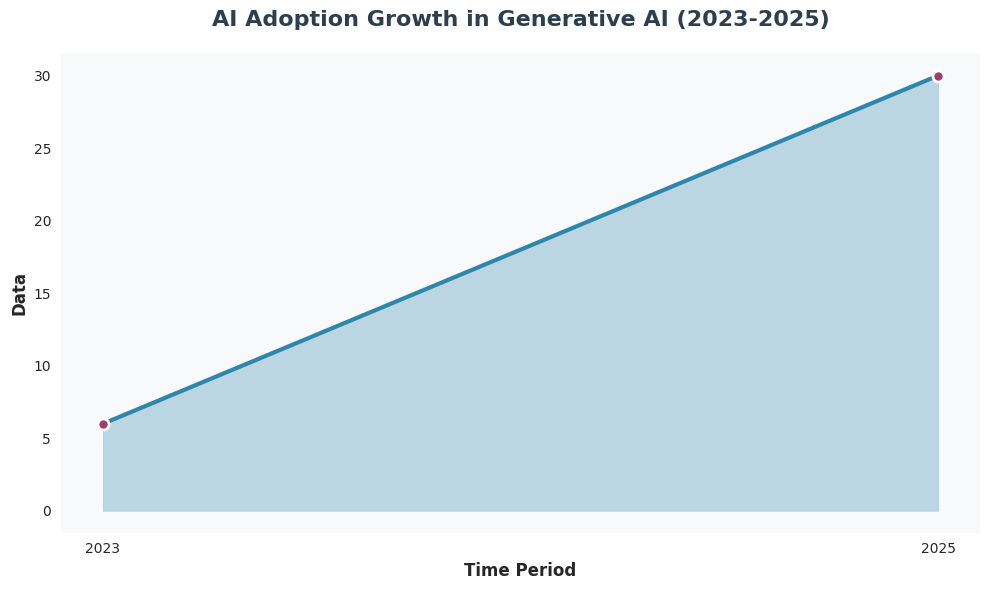
Consider these revealing statistics: Generative AI adoption in sales and marketing has exploded from just 6% in 2023 to 30% in 2025—a staggering 5x increase in just two years, according to Forrester 2024. This rapid acceleration signals a fundamental shift in how organizations approach lead generation and sales pipeline management.

The problem extends beyond outdated technology. Marketing automation without intelligence creates its own set of challenges. Sales teams waste countless hours pursuing marketing qualified leads (MQL) that will never convert, while genuinely promising prospects slip through the cracks. The result? Inefficient resource allocation, missed revenue opportunities, and frustrated sales professionals.
Current market trends reveal a decisive shift toward dynamic, behavior-adaptive lead scoring systems. Organizations are abandoning rigid, rule-based approaches in favor of AI-powered platforms that evaluate leads based on hundreds of real-time signals—firmographic data, behavioral intent, website engagement patterns, and contextual indicators that static systems simply cannot process.
The integration challenge compounds these issues. Many businesses struggle to connect their CRM (Customer Relationship Management) systems with meaningful intent data, resulting in fragmented customer views and delayed response times. In an era where speed-to-lead can make or break a deal, this disconnection is fatal to conversion rates.
How AI Improves Lead Scoring Accuracy: The Deep Dive
Understanding Predictive Lead Scoring and How It Works
Predictive lead scoring represents a quantum leap beyond traditional methodologies. Instead of relying on predetermined rules and manual point assignments, predictive analytics harnesses machine learning algorithms to analyze historical data, identify patterns, and continuously refine scoring accuracy.
Here's how it works: AI-powered systems ingest vast datasets encompassing past customer behaviors, demographic information, engagement metrics, and conversion outcomes. The machine learning lead scoring model then identifies which characteristics and behaviors correlate most strongly with successful conversions. As new data flows in, the algorithm adapts, becoming increasingly precise over time.
A compelling example comes from Grammarly's transformation using Salesforce's Einstein AI for lead scoring. The system automatically identified high-potential accounts by recognizing when multiple users from the same company were active on their free product, then flagged these accounts for sales attention. This intelligent approach led to an 80% increase in conversions to paid plans by prioritizing higher-quality leads while allowing lower-quality prospects more time to mature.
The Benefits of AI in Customer Acquisition
The advantages of AI for sales prospecting extend far beyond simple efficiency gains. Consider these transformative benefits:
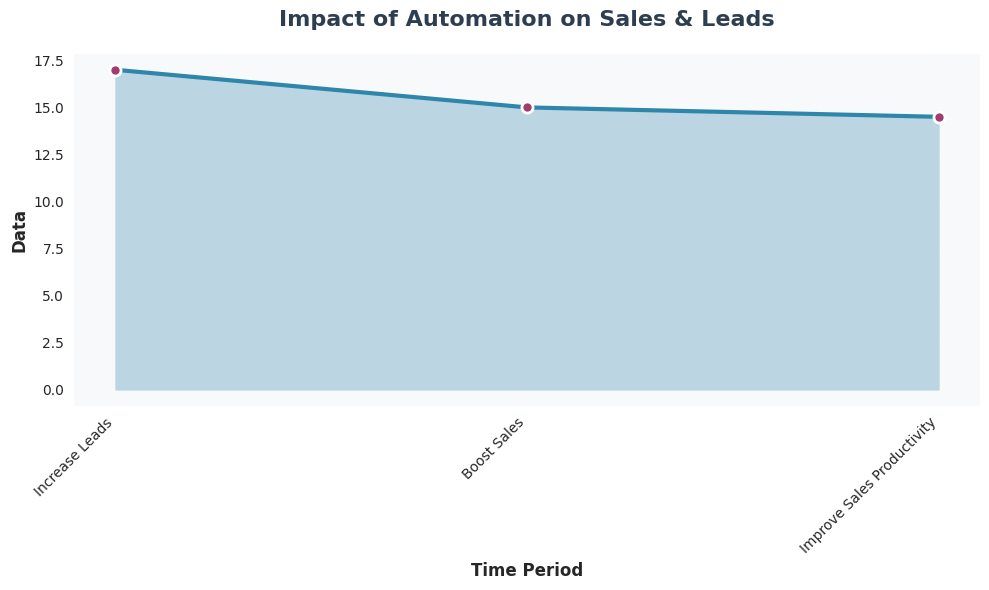
Dramatic ROI Improvements: Organizations implementing AI sales automation report increases in leads by 17%, sales boosts of 15%, and sales productivity improvements of 14.5%, according to Grand View Research. More impressively, 95% of marketers using AI or automation report their strategy as effective, compared to just 46% of non-users.
Speed and Responsiveness: A mid-market B2B SaaS company implemented an AI-driven outbound engine and reduced lead response time from hours to minutes. This acceleration resulted in a 42% increase in reply rates and generated 38% more qualified pipeline in just 90 days.

Data-Driven Sales Precision: AI tools for lead generation eliminate guesswork by analyzing behavioral intent signals invisible to human observation. These systems track micro-interactions—email opens, content downloads, website navigation patterns, social media engagement—and synthesize them into actionable intelligence.
Hyper-Personalization at Scale: AI sales enablement platforms deliver customized messaging based on individual prospect characteristics and journey stage. As experts emphasize, effective AI must consider the customer's goals and expectations to avoid irrelevant personalization and build genuine loyalty.
How Does AI Transform the Sales Process?
The transformation extends across the entire sales cycle. AI assisted sales technologies now handle tasks that once consumed hours of manual effort:
- Intelligent lead routing automatically assigns sales qualified leads (SQL) to the appropriate team members based on expertise, availability, and likelihood of conversion
- Predictive sales AI forecasts which opportunities will close and when, enabling more accurate pipeline management and resource planning
- AI guided selling provides real-time recommendations during customer interactions, suggesting optimal next steps and content
- Sales forecasting becomes dramatically more accurate as AI sales management tools analyze historical patterns and current pipeline health
What Are the Challenges of Using AI for Lead Generation?
Despite these benefits, implementing AI in B2B sales isn't without obstacles. Data quality remains paramount—machine learning algorithms are only as good as the information they process. Organizations must invest in data hygiene and integration before AI can deliver its full potential.
Change management presents another hurdle. Sales teams accustomed to intuition-based approaches may resist data-driven methodologies. Successfully navigating this transition requires clear communication about how AI sales technology augments rather than replaces human judgment.
Privacy and compliance considerations also demand attention, particularly in regulated industries. AI-powered lead generation must balance personalization with data protection requirements.
How Leads Buddha Addresses Modern Lead Scoring Challenges
While detailed product specifications weren't available through standard channels, Leads Buddha's fundamental mission—providing businesses with tools and resources to generate leads and engage potential customers—positions the company at the intersection of this AI-driven transformation.
By incorporating AI-powered lead scoring capabilities into its service ecosystem, Leads Buddha can offer clients a decisive competitive advantage. This approach moves beyond conventional lead generation by intelligently prioritizing prospects, ensuring businesses focus their efforts on those most likely to convert.
The integration of artificial intelligence into Leads Buddha's platform would address several critical client pain points:
Enhanced Lead Quality: Rather than simply generating volume, AI-enabled lead scoring analyzes vast datasets—behavioral signals, demographic characteristics, firmographic information—to assign dynamic scores. This ensures clients receive genuinely sales-ready leads, not just names in a database.
Improved Customer Acquisition ROI: Given that AI-driven approaches can reduce customer acquisition costs by 20-40% while boosting conversion rates, Leads Buddha's integration of these technologies would directly impact clients' bottom lines. This transforms lead generation from a cost center into a measurable revenue driver.
Real-Time Sales Intelligence: By leveraging predictive lead scoring software, Leads Buddha can provide clients with continuously updated prospect assessments. As prospects engage with content, visit websites, or demonstrate buying intent, their scores adjust automatically, enabling timely, relevant outreach.
Seamless CRM Integration: The sophisticated integration of AI agents with existing customer relationship management systems ensures intent data flows seamlessly, routing qualified leads in real-time without manual intervention. This addresses the fragmentation challenge that plagues many organizations.
The company's focus on making lead generation efforts more effective aligns perfectly with AI's core strength: transforming raw data into actionable intelligence. For Leads Buddha's clients, this means moving from reactive lead management to proactive, predictive customer acquisition strategies.
This approach also addresses the reality that 94% of sales leaders with AI agents find them essential for meeting business demands, according to Forbes Advisor. By embedding these capabilities into its offerings, Leads Buddha positions its clients among the innovative 13% currently using AI for lead scoring—a significant competitive differentiator.
Actionable Takeaways: Implementing AI-Powered Lead Scoring
Ready to transform your customer acquisition strategy? Here are five practical steps you can implement immediately:
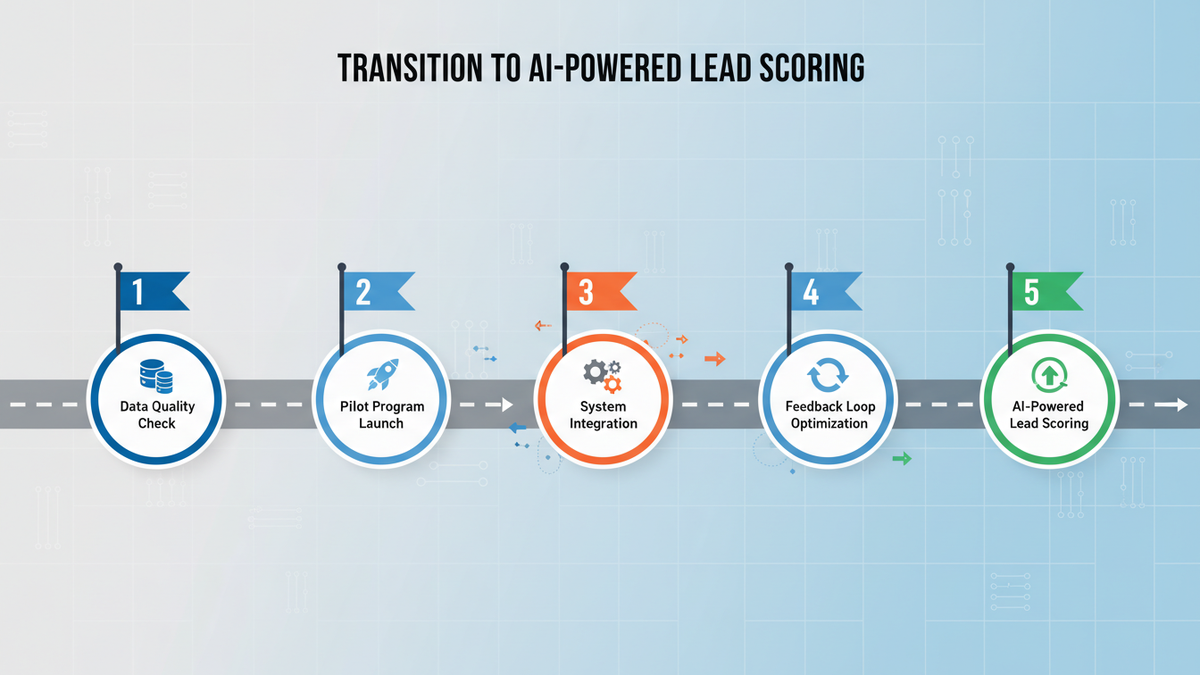
1. Audit Your Current Data Infrastructure: Before implementing using AI for lead generation, assess your data quality and accessibility. Ensure your CRM contains clean, comprehensive information about past customers and their journeys. Identify gaps in behavioral tracking and establish processes to capture missing signals.
2. Start with Pilot Programs: Don't attempt enterprise-wide transformation overnight. Select a specific segment—perhaps a particular product line or customer persona—and implement predictive lead scoring for that subset. Measure results rigorously, learn from the experience, and expand gradually.
3. Integrate Intent Data Sources: Connect your AI sales automation platform with multiple intent signal providers. Website analytics, email engagement metrics, social media interactions, and third-party intent databases should all feed into your scoring algorithm. The more comprehensive your data inputs, the more accurate your predictions.
4. Establish Clear Scoring Thresholds: Define what constitutes a marketing qualified lead versus a sales qualified lead in your AI-powered system. Create transparent criteria for when leads should be nurtured versus immediately contacted. Align sales and marketing teams around these definitions to ensure consistent execution.
5. Commit to Continuous Optimization: AI in marketing and sales isn't a "set it and forget it" solution. Schedule regular reviews of your model's performance. Analyze which predicted high-value leads actually converted and which didn't. Feed these learnings back into your system to improve accuracy over time. Consider emerging tools like ChatGPT sales applications for conversational lead qualification.
Remember: artificial intelligence for sales leads works best when combined with human expertise. Use AI to identify and prioritize, but rely on skilled sales professionals to build relationships and close deals. The goal is augmentation, not replacement.
Conclusion: The Future of Customer Acquisition Is Intelligent
The evidence is overwhelming: AI in sales isn't just an incremental improvement—it's a fundamental reimagining of how businesses identify, engage, and convert prospects. From Grammarly's 80% conversion increase to mid-market companies generating 38% more qualified pipeline, the results speak for themselves.
As we've explored, predictive lead scoring, AI-powered lead generation, and intelligent sales automation are transforming customer acquisition from an art into a science. Organizations that embrace these technologies position themselves to capture market share while competitors struggle with outdated methodologies.
For businesses partnering with forward-thinking lead generation providers like Leads Buddha, this AI-driven evolution represents an opportunity to maximize efficiency, reduce acquisition costs, and focus sales efforts where they matter most. The question isn't whether to adopt AI in sales—it's how quickly you can implement these game-changing capabilities.
The 13% of businesses currently using AI for lead scoring won't remain a minority for long. Market trends, customer expectations, and competitive pressures are driving rapid adoption. The companies that move decisively now will define the next era of business growth and customer acquisition excellence.
Your next step? Assess your current lead scoring approach, identify the gaps AI could fill, and begin your transformation journey. The future of sales is intelligent, predictive, and powered by artificial intelligence. The only question is whether you'll lead the change or follow it.