The Role of AI in Transforming Lead Generation Strategies in 2026
Leads Buddha

AI reshapes lead generation for 2026: Explore strategies.
The Role of AI in Transforming Lead Generation Strategies in 2026
Introduction
In the rapidly evolving landscape of digital marketing, AI is pivotal to reshaping lead generation strategies. By 2026, companies will witness transformative changes fueled by AI advancements, enabling more efficient, precise, and scalable lead generation. As businesses strive to maintain a competitive edge, understanding these changes is crucial. This blog dives into emerging trends and market implications, supported by data insights and expert analyses.
The AI Revolution in Lead Generation
Autonomous Agents and Multi-Step Automation
AI is no longer just a tool for assistance; it now acts as an autonomous agent capable of intricate tasks. In 2026, AI-driven lead generation systems will autonomously manage everything from prospect identification to lead nurturing. This shift reduces manual workloads on business development representatives, allowing them to focus on strategic decision-making.
Hyper-Personalization and Intent-Based Targeting
AI leverages big data and machine learning to create highly personalized marketing messages. By analyzing user behavior and intent data, AI systems tailor outreach efforts for each potential lead. This hyper-personalization, paired with predictive analytics, allows businesses to engage prospects more effectively, ensuring relevance and timeliness.
Domain-Specific Solutions Over Generic AI Tools
The AI lead generation market is moving towards specialized solutions tailored to business needs. Companies are shifting from generic AI tools to solutions offering detailed insights and industry-specific applications. AI vendors now focus on expertise and proven real-world outcomes.
Enhanced Engagement with Speed-to-Lead Technology
Speed is crucial in lead conversion. In 2026, AI systems with chatbots and automated responders will ensure 24/7 engagement, enhancing conversion rates through immediate interaction.
Advanced Data Enrichment and Verification
AI-driven technologies automate data enrichment, transforming minimal contact details into enriched lead profiles with accurate business insights. Automation in data verification ensures companies work with relevant, up-to-date information.
Data Insights & Visualization
Market Share of AI-driven Lead Generation Platforms
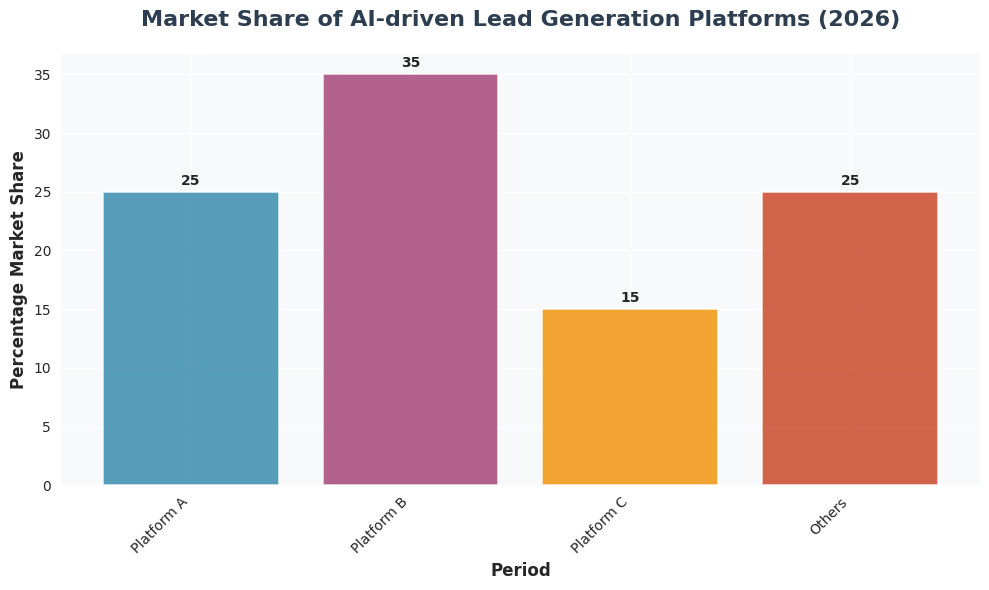
Further analysis of this chart...
Adoption Rate of AI in Lead Generation
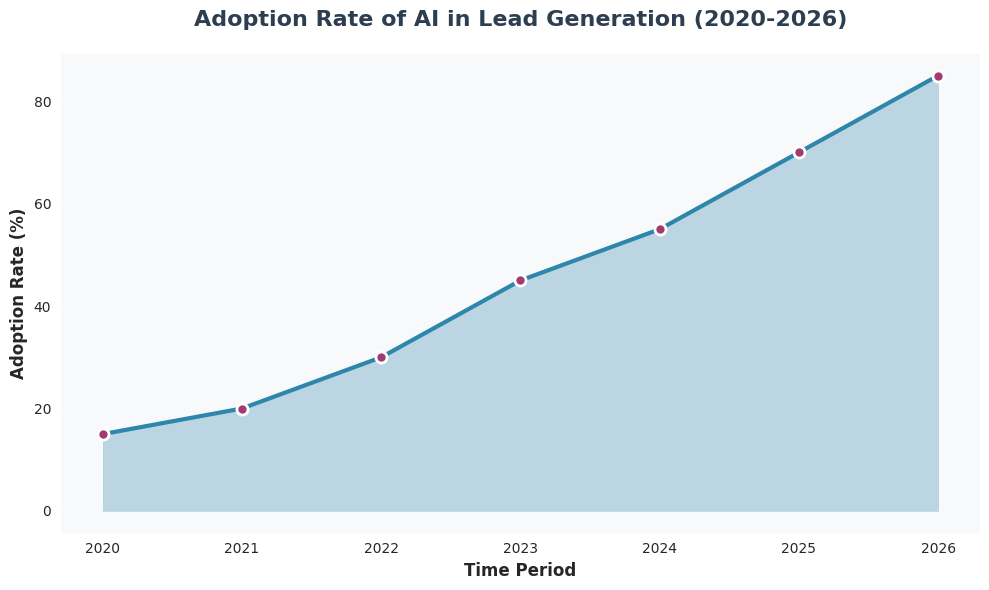
Additional commentary on these trends...
Distribution of AI Use Cases
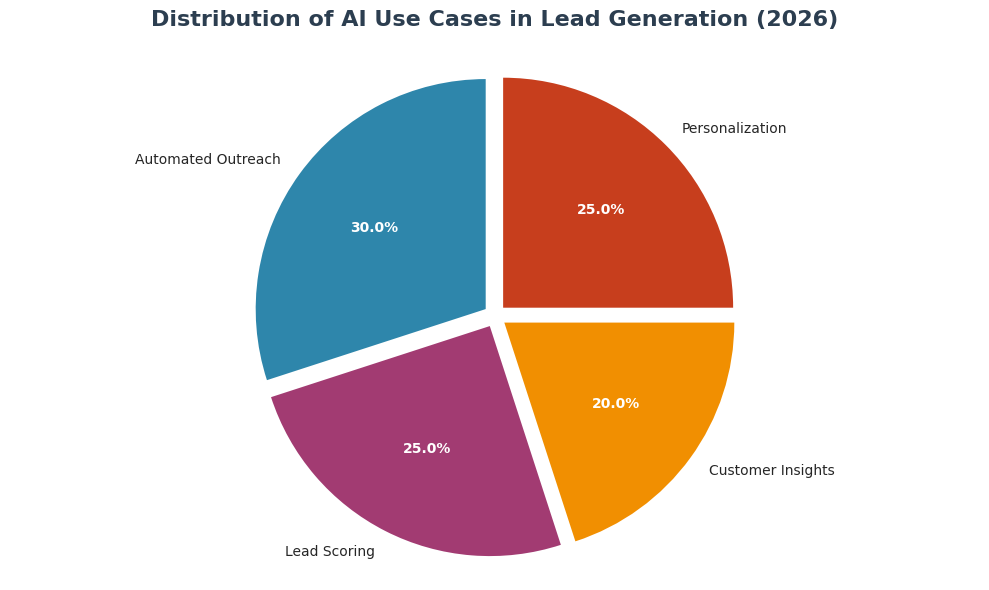
Insights and explanations...
Conclusion and Key Takeaways
Integrating AI into lead generation strategies enhances operational efficiency and delivers measurable outcomes. Successful deployment requires clean data and strategic human oversight. Companies adopting these tools are poised to lead the future of digital marketing.
Key Takeaways
- AI-driven autonomous agents revolutionize lead generation by automating complex tasks.
- AI hyper-personalization enhances engagement with targeted, customized approaches.
- Businesses are opting for domain-specific AI solutions aligning with strategic goals.
- Speed-to-lead capabilities of AI systems significantly enhance conversion odds.
Content Structure
- Introduction
- The AI Revolution in Lead Generation
- Autonomous Agents and Multi-Step Automation
- Hyper-Personalization and Intent-Based Targeting
- Domain-Specific Solutions Over Generic AI Tools
- Enhanced Engagement with Speed-to-Lead Technology
- Advanced Data Enrichment and Verification
- Data Insights & Visualization
- Conclusion and Key Takeaways