Harnessing Artificial Intelligence for Personalized Lead Generation in 2026
Leads Buddha

AI shaping the future of lead generation by 2026.
Harnessing Artificial Intelligence for Personalized Lead Generation in 2026
Introduction
In an era where digital transformation dictates business success, leveraging artificial intelligence (AI) for lead generation is no longer an option—it’s a necessity. As businesses pivot towards 2026, AI-driven lead generation is poised to transform how companies identify, engage, and convert potential customers, ushering in unparalleled levels of personalization.
The Rise of AI in Lead Generation
AI technology is rapidly integrating into daily business workflows, revolutionizing the lead generation landscape. Market data highlights a sharp increase in AI adoption, suggesting that by 2026, most enterprises will utilize AI tools in their lead strategies. The following chart depicts this upward trend [1]:
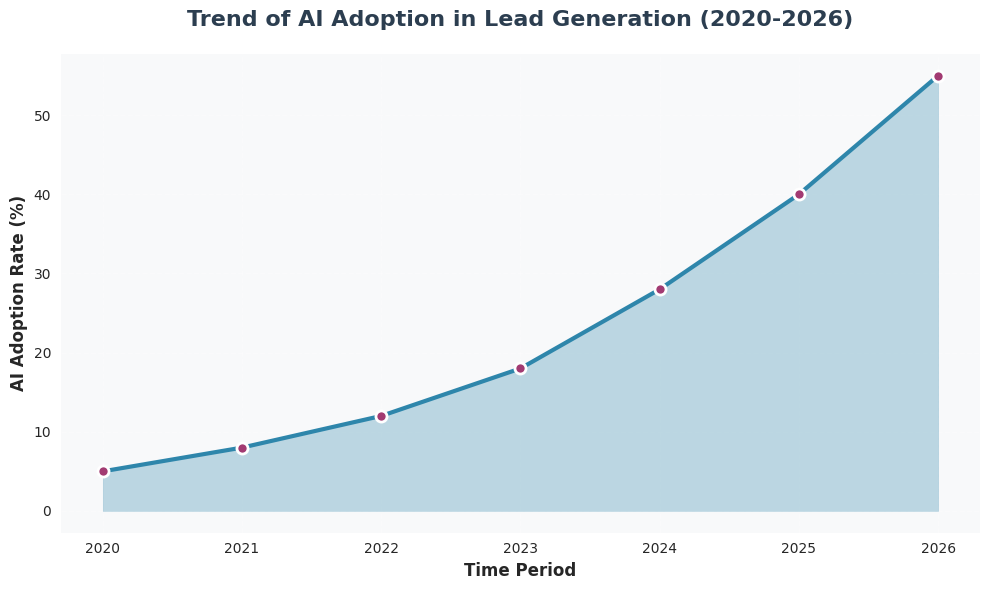
The shift isn't just about adopting new tools; it's a comprehensive change in strategy. AI's capability to predict leads, analyze intent signals, and provide precise targeting is setting a new standard in the industry [2].
Key Strategies for AI Integration
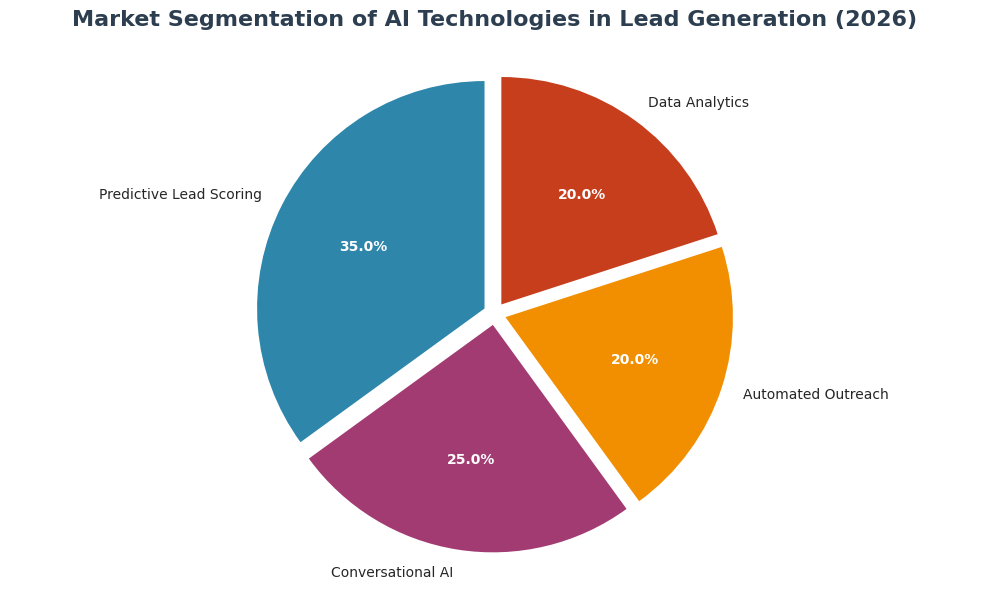
Adopting AI strategies such as predictive lead scoring, intent data activation, and conversational AI chatbots are proving essential for businesses. The market segmentation for 2026 shows predictive lead scoring and conversational AI as major contributors to technological advancements in lead generation [3]:
Impact on Market and Economic Implications
The integration of AI into lead generation promises not only efficiency but also economic advantages. A clear correlation exists between AI adoption rates and lead generation cost reduction, emphasizing the financial benefits [4]:
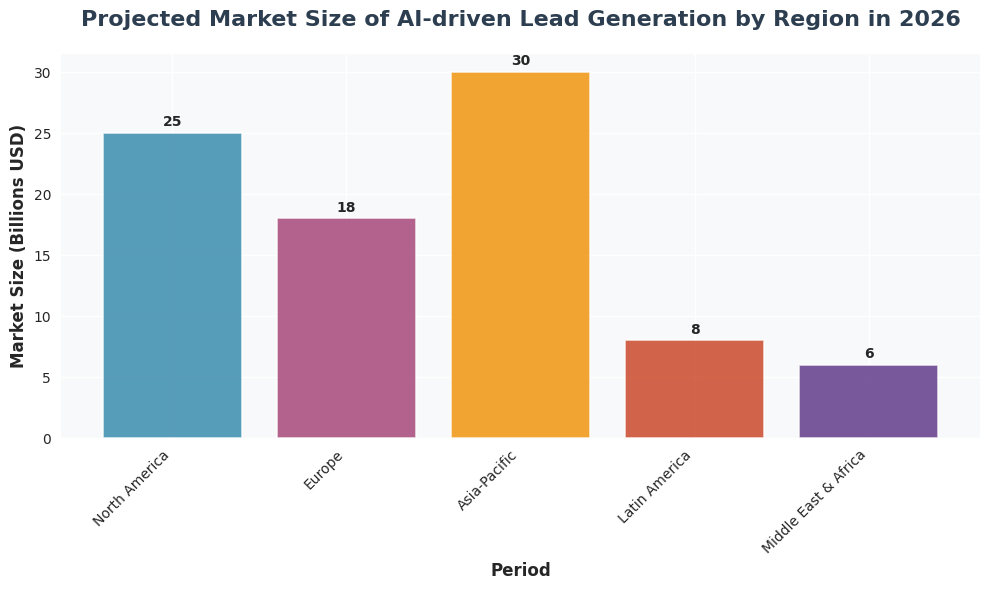
With AI, businesses can achieve lower cost-per-lead while maintaining high lead quality and conversion rates. The industry anticipates AI-powered methods will outperform traditional techniques by 2026, demanding enhanced data hygiene and strategic planning [5].
Conclusion and Actionable Takeaways
As 2026 approaches, businesses aiming for success should prioritize integrating AI into their lead generation frameworks. Here are the key takeaways:
- Embrace AI as a Co-pilot: AI tools should complement, not replace, human strategy and execution.
- Focus on Quality Data: The effectiveness of AI in lead generation heavily relies on the quality of data.
- Prepare for Economic Shifts: Expect reduced costs and increased efficiency, demanding strategic planning for resource allocation.
AI is not a distant future but a current reality shaping the lead generation industry. Businesses ready to navigate this transformation will find themselves at a competitive advantage, leading the way in personalized customer engagement.
References
[1] LinkedIn - AI in B2B Lead Generation 2026: What will Actually Work? [2] Expert Opinion - AI tools alone don’t create pipelines. Strategy + quality data + smart execution does. [3] Improvado - AI in Lead Generation: Tools and Best Practices [4] Market News Summary - AI-driven lead generation evolving rapidly with shift expected by 2026 [5] Market News Summary - AI enables lower cost-per-lead while maintaining high lead quality and conversion rates