How AI-Powered Buyer Intent Data Transforms Lead Scoring
leadsbuddha

How AI-Powered Buyer Intent Data Transforms Lead Scoring and Conversion Rates
Introduction
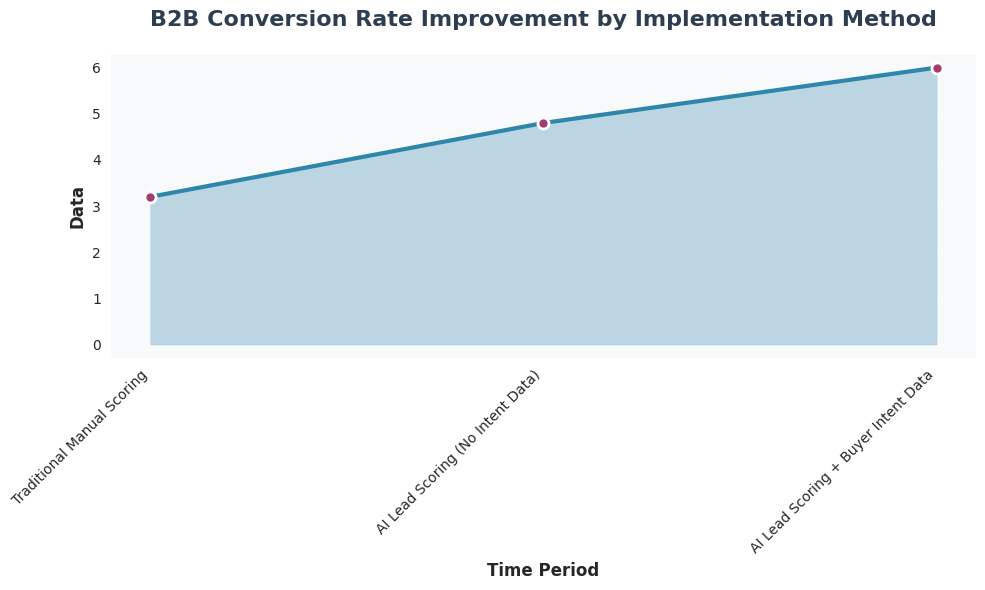
Here's a sobering reality: 75% of B2B businesses using traditional lead scoring methods are missing their best prospects. While your sales team chases cold leads based on job titles and company size, competitors leveraging AI-powered buyer intent data are closing deals 27% faster and achieving conversion rates up to 6%—nearly double the industry average of 3.2%.
The difference? They're not guessing which leads are ready to buy. They're tracking digital breadcrumbs—pricing page visits, competitor comparison research, repeated content engagement—that reveal genuine purchase intent in real-time.
In this comprehensive guide, you'll discover how buyer intent data powered by artificial intelligence is revolutionizing lead scoring models, why signal-based selling outperforms demographic targeting by 47%, and the exact strategies B2B teams use to transform lead qualification from educated guesswork into predictive science. Whether you're struggling with low conversion rates or drowning in unqualified marketing qualified leads, this data-driven approach offers a proven path to measurable improvement.
The Crisis in Traditional Lead Scoring: Why Generic Models Fail
The B2B lead generation landscape is experiencing a fundamental disconnect. Despite significant investments in marketing automation and CRM platforms, most organizations rely on lead scoring models built on assumptions rather than behavioral reality.
Traditional lead scoring assigns points based on static demographic data: company size, industry vertical, job title, geographic location. A VP at a Fortune 500 company receives high scores automatically. But this approach ignores the most critical variable: actual buying intent.
The result? Sales teams waste valuable time on leads that look perfect on paper but have zero intention of purchasing. According to Gartner's 2024 analysis, companies using conventional scoring methods experience qualification accuracy rates below 60%, meaning four out of every ten "hot leads" passed to sales are actually cold prospects.

The market data reveals the magnitude of this inefficiency. While 75% of B2B businesses have adopted some form of AI lead scoring, many still layer artificial intelligence onto fundamentally flawed demographic models. The Data as a Service market—which includes buyer intent data platforms—is projected to reach $61.18 billion by 2031, growing at 15.53% annually, precisely because organizations recognize that behavioral signals matter more than firmographic assumptions.
Consider the insurance industry case study: a mid-sized carrier using traditional scoring methods converted leads at baseline rates around 1%. After implementing predictive lead scoring powered by machine learning that analyzed behavioral patterns, demographic details, and property data with continuous AI learning, they achieved 3.5x higher conversion rates for top-scoring leads. The system reached over 90% accuracy in identifying high-conversion prospects while reducing non-efficient leads by 80%.
The problem extends beyond simple misclassification. Traditional models create friction between marketing and sales teams. Marketing celebrates hitting MQL targets while sales complains about lead quality. Without objective, behavior-based prioritization, these interdepartmental tensions persist, ultimately impacting revenue growth and market share.
Understanding Buyer Intent Data: The Signal Revolution
Buyer intent data represents a paradigm shift from asking "Who might buy?" to "Who is actively researching solutions right now?" This distinction transforms B2B lead qualification from fortune-telling into forensic analysis.
What Is Buyer Intent Data?
Buyer intent data captures digital signals that indicate a prospect's position in the purchase journey. These signals fall into two primary categories:
Explicit intent signals are direct actions demonstrating research behavior: downloading whitepapers, attending webinars, requesting product demos, visiting pricing pages, comparing competitor solutions, engaging with sales emails, or repeatedly returning to specific product feature pages.
Predictive intent signals leverage AI to identify patterns correlated with eventual purchases: content consumption velocity (how quickly prospects move through educational resources), engagement depth (time spent on technical documentation), cross-channel interactions (LinkedIn profile views followed by website visits), and behavioral anomalies (sudden spikes in activity after months of dormancy).
According to McKinsey's 2024 B2B Pulse research, data-driven teams using intent signals are 1.7x more likely to increase market share. This performance advantage stems from AI's ability to analyze thousands of data points simultaneously—behavioral patterns, firmographic information, engagement history, and demographic details—identifying which characteristics actually correlate with closed deals rather than which profiles match an ideal customer persona.
How Does Buyer Intent Data Improve Lead Scoring Accuracy?
The answer lies in replacing assumption-based scoring with evidence-based prioritization. Traditional models might assign 20 points for "VP title" and 15 points for "company revenue over $50M." AI-powered systems using buyer intent data instead ask: "What specific behaviors preceded our last 100 closed deals?"
Consider Grammarly's transformation. The company achieved an 80% increase in premium account conversions by implementing AI-powered lead scoring with Salesforce Einstein AI. The system didn't just track who downloaded the free version—it analyzed user engagement patterns, feature usage frequency, document types created, error correction rates, and collaboration behaviors to identify users most likely to upgrade. Sales cycles decreased from 60-90 days to significantly shorter timeframes.
The distinction between predictive and explicit buyer intent signals creates a comprehensive view of purchase readiness. Explicit signals answer "What are they researching?" while predictive signals answer "How serious are they?" A prospect who downloads one whitepaper shows mild interest. A prospect who downloads three whitepapers, visits the pricing page twice, views competitor comparison content, and checks the implementation guide within seven days is demonstrating high-probability buying intent.

The Metrics That Matter for Lead Scoring Effectiveness
Measuring lead scoring performance requires moving beyond vanity metrics like total MQLs generated. The statistics that actually correlate with revenue include:
MQL-to-SQL conversion rate: Industry benchmarks range from 15-50% depending on company maturity. Companies using AI lead scoring with intent data achieve 30% better conversion rates than traditional methods, according to 2025 B2B lead scoring benchmarks.
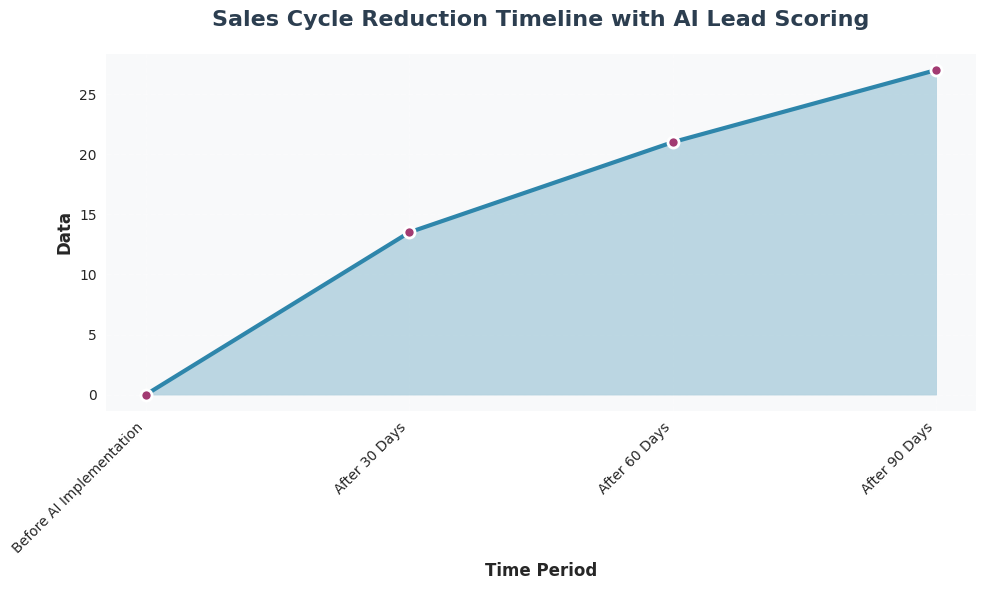
Sales cycle length: Predictive lead scoring shortens sales cycles by 27% compared to conventional approaches, per McKinsey's research. This acceleration occurs because sales teams engage prospects at optimal moments when buying intent peaks.
Win rate by score tier: The insurance industry case demonstrates that top-scoring leads convert at 3.5x the rate of average leads. Tracking win rates across scoring tiers reveals whether your model accurately predicts deal probability.
Time-to-first-response: Since buying intent windows typically span only 3-7 days, speed matters enormously. Teams using real-time intent signals reduce time-to-follow-up from days to hours, capitalizing on narrow opportunity windows.
ZS Associates emphasizes that while automated scoring triggers outreach, salesperson judgment remains key for complex prioritization and tailoring to buyer issues. The most effective teams combine AI signal analysis with human expertise, using intent data to prioritize which accounts to focus on while allowing sales professionals to contextualize outreach based on specific pain points and business situations.
How AI Can Increase B2B Conversion Rates: Implementation Strategies
The gap between organizations that talk about AI lead scoring and those achieving measurable results comes down to implementation rigor. Signal-based selling is replacing traditional demographic-only lead scoring, with organizations using buyer intent data reporting 47% better conversion rates, 43% larger deals, and 38% more closed deals, according to Landbase's 2025 analysis.
Building an AI-Powered Lead Scoring Model
Successful implementation follows a structured approach:
Step 1: Define your ideal customer profile using historical data. Don't rely on assumptions about who should buy—analyze who actually bought. Review your last 50-100 closed deals, identifying common behavioral patterns, engagement sequences, and intent signals that preceded purchases.
Step 2: Identify high-value intent signals specific to your business. Not all behaviors indicate equal buying intent. For SaaS companies, free trial activation followed by repeated feature usage might be the strongest signal. For enterprise B2B, attending a webinar plus downloading technical documentation could indicate serious evaluation.
Step 3: Implement progressive scoring that tracks engagement velocity. Static scores miss the momentum factor. A prospect who performs three high-value actions in seven days demonstrates different intent than one who performs the same actions over six months. AI systems excel at detecting these velocity patterns.
Step 4: Establish score thresholds that trigger specific actions. Real-time intent signals (e.g., 3+ high-value interactions within 7 days) should route leads directly to sales development reps for immediate outreach. Medium-intent scores might trigger automated nurture sequences, while low scores remain in long-term marketing campaigns.
Implementing AI-Powered Lead Scoring in Your Sales Process
Gartner reports that companies using AI-powered lead scoring models experience a 30% increase in sales productivity and a 25% decrease in sales cycle length. These improvements require more than just technology—they demand process alignment between marketing and sales.
The most effective approach integrates intent data into existing workflows rather than creating parallel systems. Sales intelligence platforms should surface buyer intent signals directly in CRM records, allowing sales reps to view recent engagement activity, content consumption patterns, and intent score changes without leaving their primary workspace.
Account based marketing strategy particularly benefits from intent data integration. Rather than broadcasting to entire target account lists, ABM teams can prioritize accounts showing active research behavior, personalizing outreach based on specific topics prospects are investigating. This targeted approach is why companies using hyper-personalized outreach report 40% increases in lead generation, 55% LinkedIn connection acceptance rates, and 19% direct message reply rates, according to Persana AI's 2025 research.
The Role of Marketing Qualified Leads in AI Systems
The traditional MQL definition—based on form fills and content downloads—is evolving. In AI-powered systems, MQL status depends on cumulative intent score rather than single actions. This shift addresses a longstanding sales objection: "Marketing sends us garbage leads."
By requiring multiple intent signals before MQL designation, organizations improve lead quality by 32% while reducing sales time wasted on premature outreach. The system continuously learns, becoming more accurate with every interaction and spotting patterns humans miss by processing complete datasets including source information, behavioral patterns, demographic details, and transactional data.
How Leads Buddha Transforms Lead Quality with Intent-Powered Scoring
Leads Buddha's lead generation and customer engagement platform directly addresses the challenge of identifying high-intent prospects within your lead database. While many organizations collect leads effectively, the critical bottleneck occurs at qualification—separating genuinely interested prospects from casual researchers.
By incorporating AI-powered scoring mechanisms into the platform, Leads Buddha helps B2B sales teams achieve the same transformation Grammarly experienced with their 80% conversion increase. The approach centers on behavioral analysis rather than demographic assumptions. Instead of asking "Does this prospect match our ideal customer profile?", Leads Buddha enables clients to ask "Is this prospect demonstrating active buying intent right now?"
This distinction matters enormously for ROI. Traditional lead scoring misses 75% of qualified prospects by relying on static criteria. Leads Buddha's approach captures engagement signals—website visit patterns, content consumption velocity, email interaction rates, and cross-channel behavior—that reveal genuine purchase consideration. Clients achieve 25-40% conversion improvements by scoring leads based on intent indicators and buyer behavior patterns rather than assumptions.
Real-Time Intent Signal Integration
Leads Buddha differentiates by enabling integration of buyer intent data signals directly into lead scoring workflows. Since 76% increase in win rates comes from AI lead generation combined with intent analysis, the platform provides real-time lead prioritization that routes high-intent prospects to sales immediately—reducing time-to-follow-up from days to hours.
This addresses the urgency factor where buying intent windows are narrow, typically 3-7 days. When a prospect visits your pricing page three times in one week, views competitor comparison content, and downloads your implementation guide, they're signaling active evaluation. Leads Buddha surfaces these signals instantly, allowing your sales team to capitalize on the 47% higher conversion rates from signal-qualified leads versus generic marketing lists.
The platform tracks comprehensive engagement patterns: which content pieces prospects consume, how frequently they return to your website, whether they're researching competitors simultaneously, and how their activity velocity changes over time. This multi-dimensional view reveals purchase readiness far more accurately than any single metric.
Shifting from Demographics to Behavior-Driven Prospecting
Leads Buddha positions its platform as enabling the transition from demographic-only lead generation to behavior-driven prospect identification. By surfacing which leads demonstrate buying intent signals—pricing page visits, product comparisons, competitor research, email engagement velocity—Leads Buddha helps clients reduce wasted outreach on low-intent prospects while increasing focus on high-probability accounts.
This capability is particularly valuable for B2B teams facing budget pressure, with marketing budgets declining to 7.7% of revenue in 2024. Organizations must achieve better results with fewer resources. Leads Buddha enables this by improving lead quality by 32% and shortening sales cycles by 27%, directly improving ROI on customer acquisition costs.
The platform supports account based marketing tactics by identifying which target accounts are actively researching solutions. Rather than treating all accounts equally, sales teams can prioritize those showing intent signals, personalizing outreach based on the specific content prospects have consumed. This targeted approach aligns with research showing personalized emails achieve 14% higher open rates and 10% higher response rates compared to non-personalized approaches.
Actionable Takeaways: Implementing Intent-Based Lead Scoring
Transforming your lead scoring approach from demographic guesswork to intent-driven precision requires strategic planning and systematic execution. Here are five actionable steps you can implement immediately:
1. Audit your current lead scoring model against actual conversions. Pull data on your last 100 closed deals. Which lead scores did they have when first generated? How did their scores change before purchase? Identify gaps where high-scoring leads didn't convert or low-scoring leads became customers. These discrepancies reveal where your current model fails to capture genuine buying intent.
2. Define your top 10 buyer intent signals specific to your sales cycle. Not all actions indicate equal purchase readiness. Collaborate with sales teams to identify which prospect behaviors historically preceded closed deals. Examples might include: pricing page visits, ROI calculator usage, case study downloads in your industry, product comparison content consumption, or repeated returns to specific feature pages within short timeframes.
3. Implement velocity-based scoring that tracks engagement momentum. Static point systems miss the critical timing dimension. A prospect who performs five high-value actions in one week demonstrates different intent than one spreading the same actions across six months. Configure your lead scoring to weight recent activity more heavily and flag acceleration patterns for immediate sales outreach.
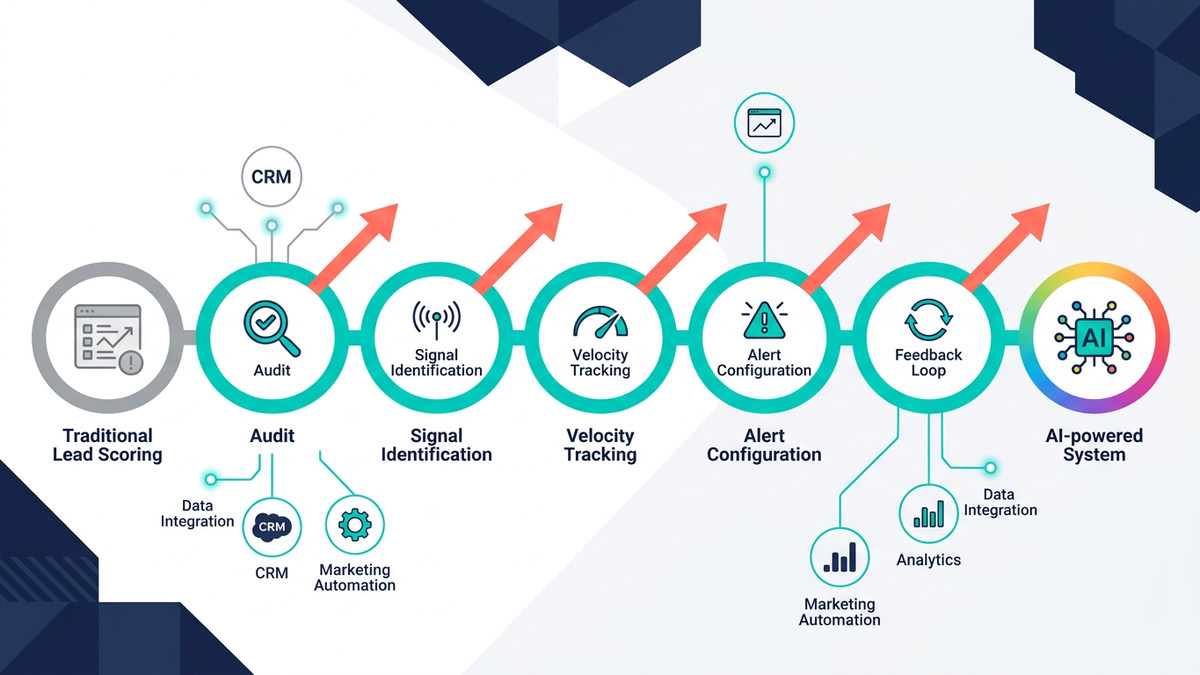
4. Create alert workflows for real-time intent spikes. Configure your system to notify sales reps immediately when prospects cross critical score thresholds or perform high-intent actions like pricing page visits. Since buying intent windows span only 3-7 days, speed determines whether you capitalize on opportunity or lose to faster competitors. Automated alerts ensure no high-intent prospect falls through cracks.
5. Establish closed-loop feedback between sales and marketing. The most accurate lead scoring models continuously learn from outcomes. Implement regular reviews where sales provides feedback on lead quality, and marketing adjusts scoring criteria based on conversion data. This iterative refinement is how AI systems achieve the 90%+ accuracy rates seen in top-performing organizations.
These steps don't require massive technology investments or complete system overhauls. Many organizations achieve significant improvements by simply tracking engagement signals they're already capturing but not systematically analyzing.
Conclusion: The Competitive Advantage of Intent-Driven Lead Scoring
The B2B landscape is experiencing a fundamental transformation in how organizations identify and prioritize prospects. Companies clinging to traditional demographic-based lead scoring are systematically outperformed by competitors leveraging AI-powered buyer intent data—achieving 47% better conversion rates, 27% shorter sales cycles, and 32% higher lead quality.
The evidence is unambiguous: signal-based selling outperforms assumption-based prospecting across every meaningful metric. Organizations analyzing behavioral patterns, engagement velocity, and cross-channel intent signals achieve conversion rates up to 6%, nearly double the industry average. They close larger deals faster while reducing sales team time wasted on unqualified prospects.
Leads Buddha's lead generation and customer engagement platform provides the infrastructure to capture this competitive advantage. By integrating buyer intent data into your lead scoring workflows, surfacing real-time engagement signals, and enabling behavior-driven prospect prioritization, you transform lead qualification from subjective guesswork into objective, measurable science.
The question facing B2B sales and marketing leaders isn't whether to adopt intent-based lead scoring—it's how quickly you can implement these systems before competitors capture market share you'll struggle to reclaim. As the Data as a Service market accelerates toward $61.18 billion by 2031, early adopters are establishing sustainable advantages that compound with every interaction their AI systems learn from.
The future of lead scoring is here. It's data-driven, behaviorally focused, and powered by artificial intelligence that spots buying intent patterns invisible to human analysis. Organizations that embrace this evolution will thrive. Those that don't will wonder why their perfectly profiled prospects keep buying from someone else.